
Are you a SKY-HI fan who wants to learn Japanese with your favorite J-Pop stars? In Lesson 5, I will translate a real sentence from our CEO, rapper, and former AAA member, and break it down step by step. By following this simple method, you will soon be able to understand Japanese posts from all your favorite BMSG artists and other J-Pop idols without a translator.
BMSG FES 25が閉幕しました。
By the end of this lesson, you will be able to read and fully understand the Japanese SKY-HI uses here. This is the perfect opportunity for international FLYERS and BMSG fans to level up their Japanese skills and get one step closer to understanding messages from SKY-HI and communicating with him in Japanese.
So let’s start learning Japanese with SKY-HI!
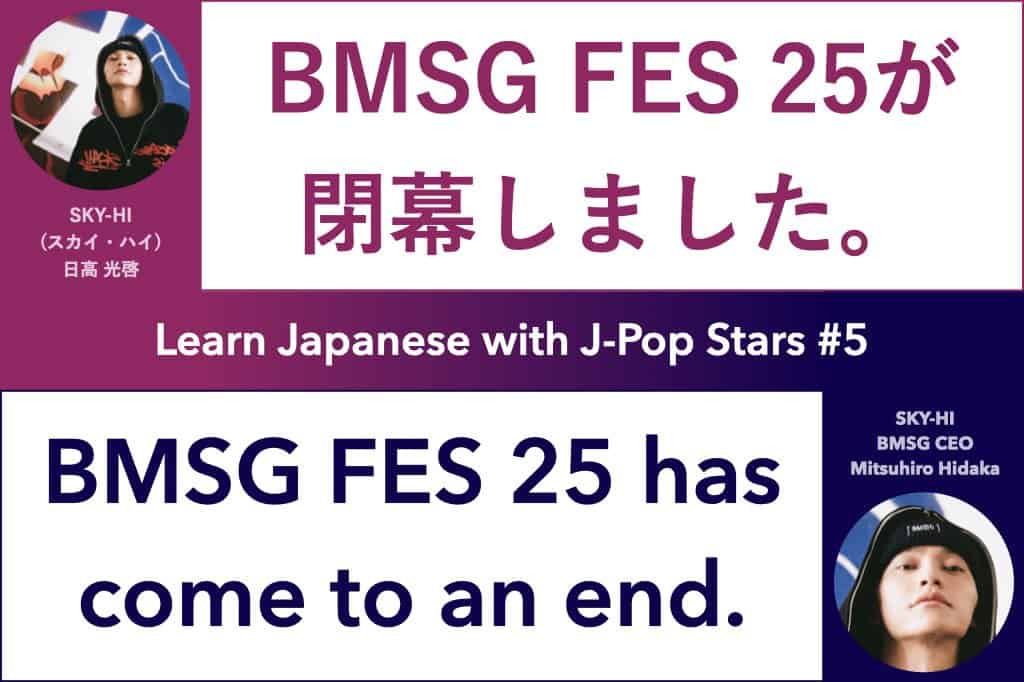
Learn Japanese with J-Pop Stars #5 (SKY-HI)
⏳ Study Time: 10-15 min
How to study Japanese by yourself:
- Read a Japanese sentence aloud
- Break down its words and meanings
- Review and level up your Japanese skills
Step 1) Learn to Read Japanese Sentences and Kanji
日本語
BMSG FES 25が閉幕しました。
1.1 漢字 (Kanji)
BMSG FES 25 が 閉幕 しました。
1.2 カナ (Kana)
- BMSG (ビーエムエスジー)
- FES (フェス)
- 25 (にじゅうご)
- が
- 閉幕 (へいまく)
- しました
1.3 ローマ字 (Romaji)
- BMSG (Bii Emu Esu Jii)
ビー・エム・エス・ジー - FES (fesu)
フェス - 25 (nijyuugo)
にじゅうご - が (ga)
- 閉幕 (heimaku)
へいまく - しました (shimashita)
Step 2) Study Japanese Words and Their Meanings
English Translation
- BMSG FES 25 has come to an end.
- BMSG FES 25 has come to a close.
- BMSG FES 25 has drawn to a close.
- The curtain has fallen on BMSG FES 25.
- The curtain has closed on BMSG FES 25.
- The curtain has been drawn on BMSG FES 25.
- The curtain has been brought down on BMSG FES 25.
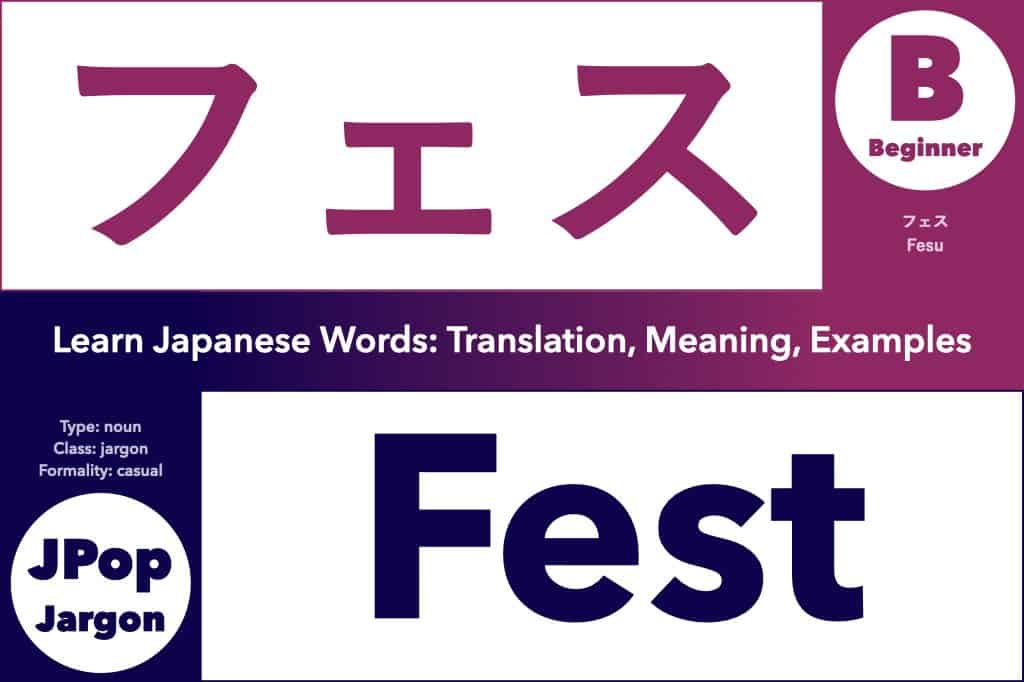
2.1 フェス (fesu)
- Word: フェス
- Word Type: noun (abbreviation)
- Word Class: common word in pop culture
- Word Formality: entertainment jargon, slightly casual
| フェス |
|---|
| フェスティバル → フェス |
| [noun] fest, fest., (music) festival, live event |
フェス (fesu) means “fest” or “fest.” and in particular “music festival” or “live event.”
This Japanese word is a shortened form of フェスティバル (fesutibaru), a loanword from the English “festival.”
Although the origin is “festival,” Japanese speakers almost always use フェス for big entertainment events, such as music festivals, rock festivals, multi-artist events, or large-scale themed gatherings.
So the most natural English translations are “music festival” or “live event.”
2.2 25 (にじゅうご, nijyuugo)
- Word: 25
- Reading: にじゅうご
- Word Type: noun
- Word Class: JLPT N5ish
- Word Formality: neutral, general use
| 25 (二十五) |
|---|
| [noun] twenty five |
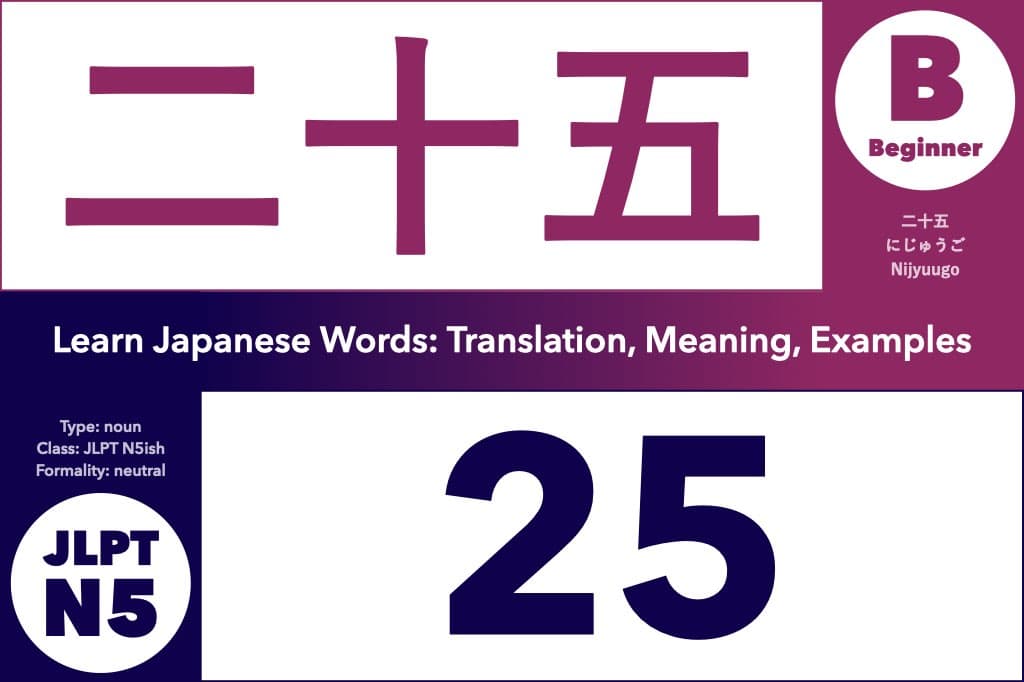
25 (二十五, にじゅうご, nijyuugo) is the number “twenty-five” in Japanese.
It is written with the kanji 二 (に, ni, 2), 十 (じゅう, jyuu, 10), and 五 (ご, go, 5), which together form “twenty-five.”
Just like in English, the number can be used in a wide variety of situations: dates, ages, item counts, event names, volumes, and more.
In SKY-HI‘s example sentence, it stands for the year ’25.
2.3 が (ga)
- Word: が
- Word Type: particle
- Word Class: common, JLPT N5
- Word Formality: neutral, general use
| が |
|---|
| [particle] marks the subject of a sentence |
The particle が (ga) marks the subject of a sentence.
It is one of the core grammar particles in Japanese and most commonly marks the subject of a sentence, showing who or what is performing an action or experiencing a state.
It often appears with intransitive verbs, adjectives, and expressions of ability, existence, or feelings.
- 犬がいる: There is a dog.
いぬ が いる, Inu ga iru. - 雨が降る: Rain falls.
あめ が ふる, Ame ga furu. - SKY-HIが好き: I like SKY-HI.
スカイハイ が すき, Sukai-hai ga suki.
The particle doesn’t have one concrete translation, since its meaning changes depending on the grammar pattern and words used.

2.4 閉幕 (へいまく, heimaku)
- Word: 閉幕
- Reading: へいまく
- Word Type: noun (suru)
- Word Class: common formal word
- Word Formality: formal, ceremonial tone
| 閉幕 |
|---|
| [noun] falling of the curtain, the closing of (an event), (coming to an) end, close |
| [noun + する] the curtain falls, to draw the curtain on, to close the curtain on, to bring down the curtain on to come to an end, to come to a close |
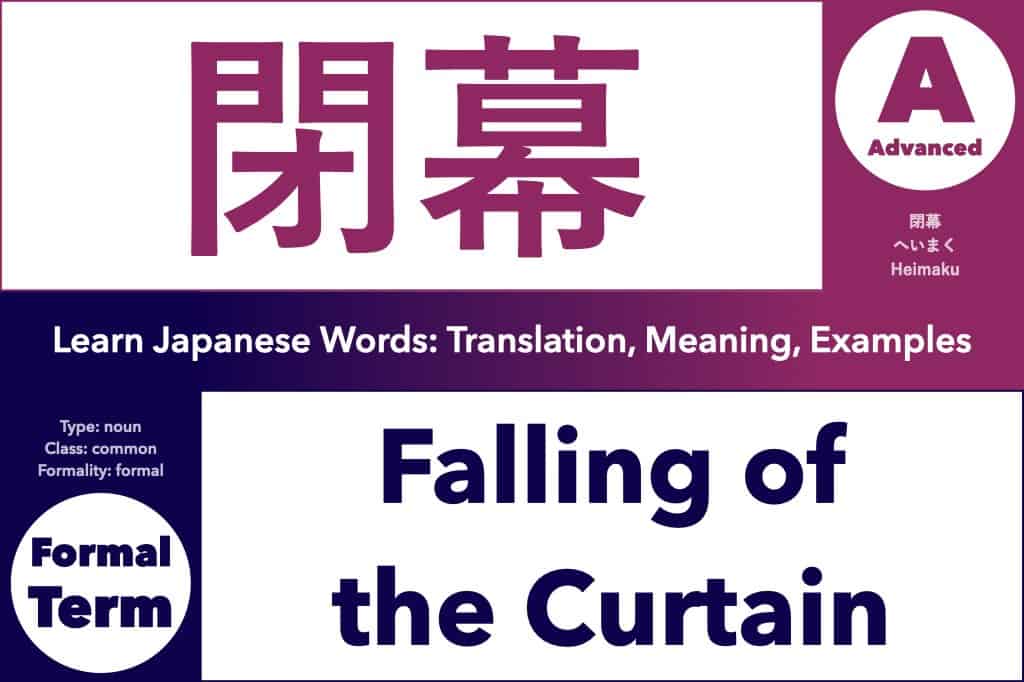
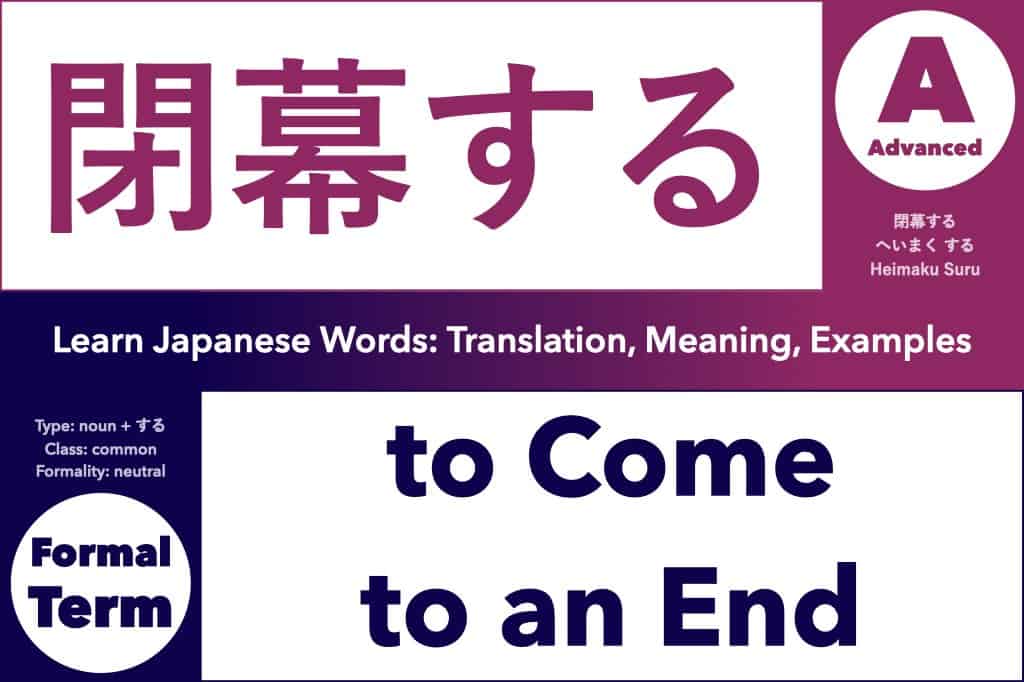
閉幕 (へいまく, heimaku) means “falling of the curtain” or “(coming to an) end“.
It is a formal noun consisting of the kanji 閉 for close and the kanji 幕 for curtain that literally means “the curtain closes.”
In modern Japanese, it is most often used metaphorically to mark the official end of large events, such as festivals, concerts, competitions, ceremonies, or long-running projects.
It has a dignified, somewhat ceremonial tone and is not typically used for everyday casual situations.
Most Japanese nouns that consist of two kanji can be turned into a verb or so-called “suru verb” by attaching the verb する (suru, “to do”).
閉幕する (へいまく する, heimaku suru) means “to draw the curtain on,” “to close the curtain on,” or “to come to an end.”
It describes the action of an event formally ending, similar to “to conclude” or “to wrap up” in English.
閉幕する is a transitive verb that takes the particle が.
2.5 しました (shimashita)
- Word: しました
- Word Type: verb (past tense)
- Word Class: common, JLPT N5
- Word Formality: polite language
| しました |
|---|
| する → します → しました |
| [verb (past tense)] did, have done |
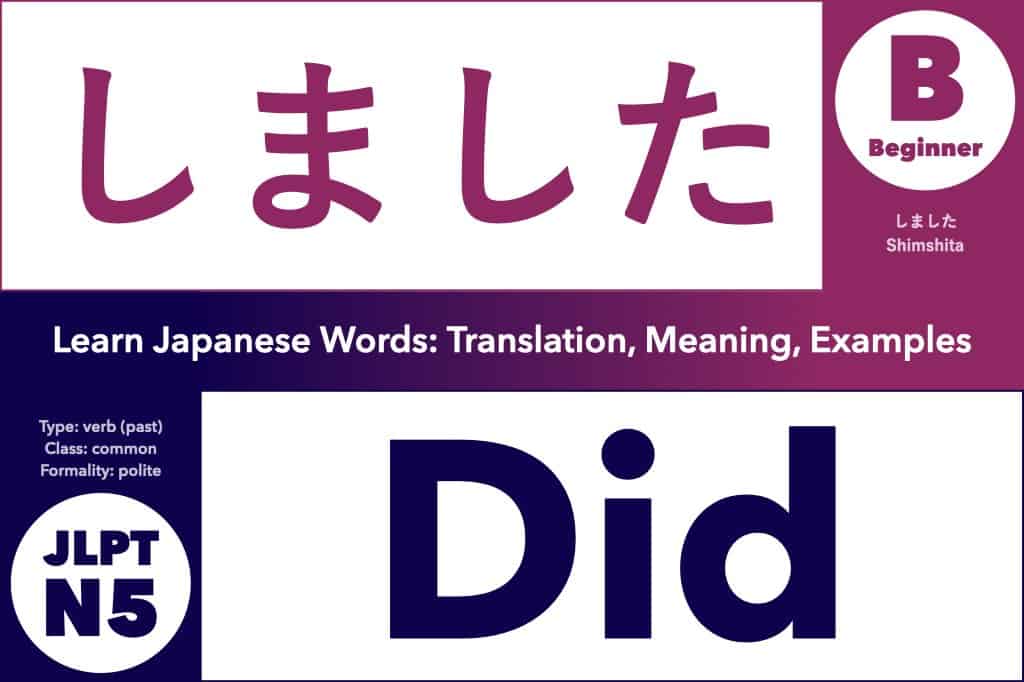
しました (shimashita) means “did” or “have done.”
This Japanese word is the polite past tense form of the verb する (suru, “to do”).
- する (dictionary form)
- した (past tense 〜た)
- します (polite present ~ます)
- しました (polite past tense ~ました)
It is used to politely say that an action was done, has been completed, or took place in the past.
Because する is a very common verb and appears in countless combinations, you will encounter its past tense form しました a lot in everyday Japanese.
In many set expressions, しました can translate naturally as “did,” “made,” “held,” “finished,” or “took place,” depending on the noun it follows.
As with all polite ます-forms, しました is used in formal speech, customer service, public announcements, and respectful conversations. In informal situations, した (shita) is typically used.
BMSG FES 25が閉幕しました。
With this sentence, SKY-HI is letting his followers know that BMSG FES 25 has officially come to a close. His choice of words feels professional and heartfelt, and it carries a mix of gratitude and accomplishment, almost like gently closing the curtain on a major production.
The message doesn’t sound like a simple “The event is over.” Instead, it conveys the feeling that an important chapter has reached its conclusion, inviting fans to reflect on the experience with warmth and appreciation, just as SKY-HI does.
Step 3) Review and Improve Your Japanese
How to learn Japanese fast:
- Review sentences and words regularly
- Listen, read, speak, and write in Japanese
- Continue to the next sentence and repeat
3.1 Review & Remember Japanese With Flashcards
Create Sentence Flashcard for:
- BMSG FES 25が閉幕しました。
Create Word Flashcards for:
- フェス
- 25 (or 二十五)
- が
- 閉幕
- 閉幕する
- しました
Examples
Front: Japanese sentence/word written in kanji
Back: Kana, translations, any other information
| My Sentence Flashcard |
|---|
| Front: BMSG FES 25が閉幕しました。 |
| Back: BMSG FES (フェス) 25 (にじゅうご) が閉幕 (へいまく) しました。 BMSG FES 25 has come to an end. The curtain has fallen on BMSG FES 25. The curtain has closed on BMSG FES 25. The curtain has been brought down on BMSG FES 25. |
| My Word Flashcard |
|---|
| Front: 閉幕する |
| Back: 閉幕(へいまく) する the curtain falls, to draw the curtain on, to close the curtain on, to bring down the curtain on to come to an end, to come to a close |
3.2 Practice & Level Up Your Japanese Skills
How to improve your Japanese skills fast:
- Reading: Read Japanese for 5-10 min
- Writing: Write in Japanese for 5-10 min
- Speaking: Speak Japanese for 5-10 min
- Listening: Listen to Japanese for 5-10 min
A) Listening Practice
Listen to this song.
Can you catch the Japanese we learned today?
Source: SHISHAMO 〜 君と夏フェス
B) Reading Practice
Read the following sentences.
Can you spot the Japanese we learned today?
- ライブツアーは閉幕です。
- フェスの思い出は最高 (さいこう)
- オリックス2daysは閉幕しました😊
- 25歳 (さい) のお誕生日おめでとう〜!
- フェスのグッズやっと買いました (かいました)
- SKY-HIさんのライブツアー25に行った (いった) よ!
- フェスが閉幕しても、みんなの思いでは残る (のこる)。
You can also try to read SKY-HI‘s IG post.
C) Speaking Practice
Say the following sentences.
Can you repeat them aloud without looking?
- これ で 閉幕 です!!!
- フェス が 閉幕 しました。
- お誕生日 パーティー を しました。
- イベント が もうすぐ 閉幕 します。
- フェス の グッズ を ゲット しました。
- フェス 25 が 始まりました (はじまりました)。
- クリスマス は 12月 (じゅうにがつ) 25日 (にち) です。
D) Writing Practice
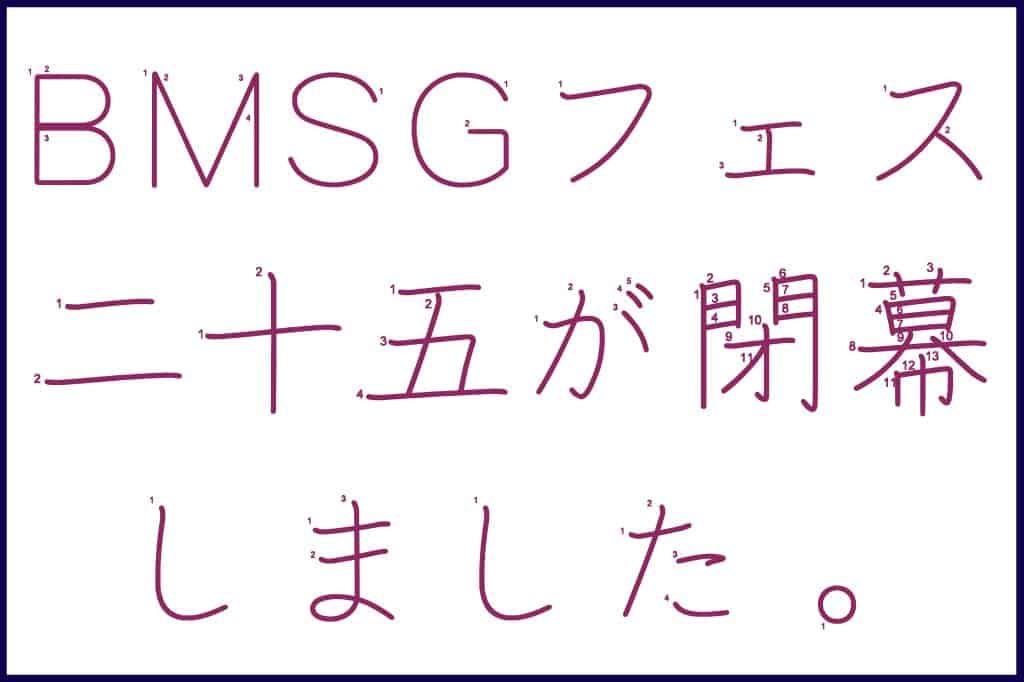
Type (or write down) the words and sentences in Japanese.
3.3 Continue Studying Japanese
You’ve completed Learn Japanese with J-Pop Stars #5 🎉
You’re now one step closer to understanding SKY-HI and communicating with him and other BMSG artists in Japanese!
- Japanese Words +6
- Japanese Sentences +1
Well done ♪٩(⌒‐⌒)۶♪
| Our Next Goal |
|---|
| Japanese Sentences 5 / 10 |
| Japanese Words 18 / 20 |
| Our Ultimate Goal |
|---|
| Japanese Sentences 5 / 10,000 |
| Japanese Words 18 / 25,000 |
To reach native fluency, our goal is to master 10,000 sentences and 25,000 words.
So let’s keep studying and continue our journey to Japanese fluency!
➡️ Next Lesson: Learn Japanese with J-Pop Stars #6
⬅️ Need a quick review? Revisit the previous lesson!
▶️ New here? Start from Lesson 1!
… or keep learning Japanese with one of my other free lessons!
- 📺 Learn Japanese with Anime
Understand anime dialogue without subtitles - 📖 Learn Japanese with Manga
Read your favourite manga written in kanji and kana - 🎵 Learn Japanese with Songs
Understand the meaning behind your favourite lyrics
🎤 Learn Japanese with J-Pop Stars
Learn real Japanese from your favourite stars and idols - 🎮 Learn Japanese with Video Games
Understand game dialogue and the characters you love
For more information about the artists, please visit SKY-HI’s Official Homepage or YouTube Channel.