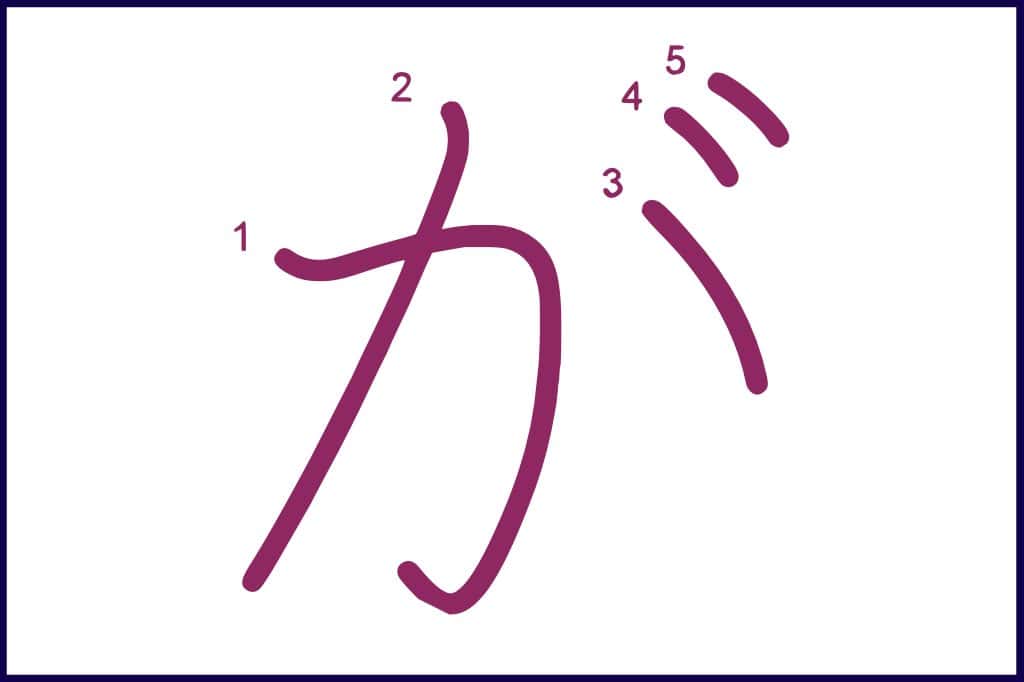
が (ga) is a core particle that marks the subject of a sentence. It shows who or what performs an action or is being described. It has no single fixed translation, but it often introduces new information, adds emphasis, or functions like “but” in certain sentences. It’s taught at the JLPT N5 level.
が
ga
marks the subject marker
In this post, you will find all the meanings, functions, and nuances of the Japanese particle が (ga). I will explain how it works and provide plenty of example sentences so you can easily understand, translate, and use the particle が in your own sentences, just like a native speaker.
が Marks the Subject of a Japanese Sentence
Word: が
Romaji: ga
Function: marks sentence subject
Type: particle
Class: common, JLPT N5
Formality: neutral, general use
English Translations of が
| が |
|---|
| [particle] marks the subject of a sentence |
Japanese Meaning of が
が (ga) is a particle that mainly marks the subject of a sentence and shows who or what is responsible for an action, state, or description.
It is one of the most important and common particles in Japanese, highlighting information and often introducing new or important information.
Since the particle doesn’t have an exact equivalent in English, が doesn’t have one fixed translation.
1. Marking the Subject (Core Function)
The most basic role of the particle が is to mark the grammatical subject.
- 犬がいる: There is a dog.
いぬ が いる, Inu ga iru. - 雨が降る: Rain falls.
あめ が ふる, Ame ga furu. - 猫が来た: The cat came.
ねこ が きた, Neko ga kita. - SKY-HIが好き: I like SKY-HI.
スカイハイ が すき, Sukai-hai ga suki.
Here, が marks the person or thing doing an action, being described, happening, existing, or being in a certain state.
2. Introducing New or Unknown Information
が is often used when the subject is new, unknown, or being identified for the first time.
- 誰が来た?: Who came?
だれ が きた?, Dare ga kita? - 何が起きた?: What happened?
なに が おきた?, Nani ga okita? - 私が行きます: I’ll go (I’m the one going)
わたし が いきます, Watashi ga ikimasu
3. Expressing Ability, Feelings, and Preferences
Certain verbs, so-called intransitive verbs, and adjectives naturally use が instead of を or は.
- 犬が怖い: I’m scared of dogs.
いぬ が こわい, Inu ga kowai - 音楽が好き: I like music.
おんがく が すき, Ongaku ga suki. - 声が聞こえる: I can hear a voice.
こえがきこえる, Koe ga kikoeru. - 日本語がわかる: I understand Japanese.
にほんご が わかる, Nihongo ga wakaru.
Here, が marks what triggers a feeling, ability, or state.
4. Emphasising and Contrasting
The particle が emphasises the subject itself, often answering an unspoken question “who?,” “which one?,” or “what exactly?“.
- このケーキがおいしい: *This* cake is the best
この ケーキ が おいしい, Kono keeki ga oishii - 猫がドアを開けた: The *cat* opened the door
ねこ が ドア を あけた, Neko ga doa wo aketa - 私が作りました: *I* made it (I am the one who made it)
わたし が つくりました, Watashi ga tsukurimashita
Here, が spotlights who or what, often “implying this is the one“, or “this one, not others.”
5. Meaning “But” (Conjunction Use)
が can also connect sentences and mean “but” in a soft, neutral way.
- 行きたいですが、忙しい: I want to go, but I’m busy
いきたい ですが、いそがしい, Ikitai desu ga, isogashii - 探したが見つけなかった: I looked but couldn’t find it.
さがした が みつけなかった, Sagashita ga mitsukenakatta - わからないが、調べてみる: I don’t know, but I’ll look it up
わからない が、しらべて みる, Wakaranai ga, shirabete miru
Here, が means “but,” “however,” or “although.”
How to tell which の it is?
A) Noun + が + Verb/Adjective → Subject Marker
When が follows a noun and is followed by a verb or adjective, it is usually the subject marker が.
B) Question word + が → Identifying the Exact Answer
When が follows a question word (誰, 何, どれ, etc.), the speaker is asking for the specific subject. The answer to that question also normally uses が.
C) Verb/Adjective + が + Feeling/Ability → Naturally Uses が
If が follows a verb or adjective that describes feelings, abilities, wants, or states, it’s most likely an intransitive verb or adjective that naturally takes the particle が.
In these cases, が marks what causes the feeling or ability.
D) Sentence + (だ・です) が, Sentence → Conjunction が
If が follows a sentence (often after だ (da) or です (desu)) and connects to another sentence, it is usually the conjunction が, meaning “but,” “though,” or “however.”
How to Use が in a Sentence
- (verb) が (sentence)。
- (noun) が (sentence)。
- (subject) が (sentence)。
- (adjective) が (sentence)。
- (sentence) が (sentence)。
- (sentence) だが (sentence)。
- (sentence) ですが (sentence)。
- (question word) が (question)?
Beginner Example Sentences
Examples
| BMSG FES 25が閉幕しました。 |
|---|
| BMSG フェス にじゅうご が へいまく しました。 |
| BMSG FES 25 has come to an end. The curtain has fallen on BMSG FES 25. The curtain has closed on BMSG FES 25. |
| BMSG fesu nijyuugo ga heimaku shimashita. |
| Free Lesson: J-Pop Stars #5 (SKY-HI) |
| 昔 爆発があった |
|---|
| むかし ばくはつ が あった |
| Once, there was an explosion. Long ago, there was an explosion. |
| Mukashi Bakuhatsu ga atta |
| Sam Porter Bridges (Death Stranding) |
| そしてまた 爆発が起こる |
|---|
| そして また ばくはつ が おこる |
| And then, once again, an explosion occurs. |
| Soshite mata Bakuhatsu ga okoru |
| Sam Porter Bridges (Death Stranding) |
| 俺が追ってきたのは |
|---|
| おれ が おって きた の は |
| What I’ve been chasing is… The thing I’ve been pursuing is… |
| Ore ga otte kita no ha [wa] |
| Megumi Fushiguro (Jujutsu Kaisen) |
| 顔が真っ黒じゃないの |
|---|
| かお が まっくろ じゃない の |
| What I’ve been chasing is… The thing I’ve been pursuing is… |
| Kao ga makkuro ja nai no |
| Vocab Lesson: 25 Beginner Words from Demon Slayer |
| 兄ちゃんが絶対助けてやるからな |
|---|
| にい ちゃん が ぜったい たすけてやる から な |
| I’ll save you, no matter what. Your big brother will save you no matter what. |
| Nii-chan ga zettai tasukete yaru kara na |
| Tanjiro (Kimetsu no Yaiba) |
| もう帰らないと日が暮れる |
|---|
| もう かえらない と ひ が くれる |
| If we don’t go home now, it’ll get dark. We need to go home soon or it’ll get dark. We should head home now before it gets dark. |
| Mou kaeranai to hi ga kureru |
| Mikasa (Attack on Titan) |
| 落ち込んだアンタが見える |
|---|
| おちこんだ アンタ が みえる |
| I can see that you’re feeling down |
| Ochikonda anta ga mieru |
| ♪ climbgrow ~ アダルト |
| 急げ 次がくるぞ |
|---|
| いそげ つぎ が くる ぞ |
| Hurry! The next one’s coming! Hurry! The next wave’s coming! |
| Isoge Tsugi ga kuru zo |
| Ignis Scientia (Final Fantasy XV) |
| これは”真の王”が星を救う物語 |
|---|
| これ は ”しん の おう” が ほし を すくう ものがたり |
| This is the tale of the “True King” saving our star This is the story of the “True King” saving our planet |
| Kore ha [wa] “Shin no Ou” ga hoshi wo [o] sukuu monogatari |
| Final Fantasy XV (FF15) |
more to come in the future…
Advanced Example Sentences
| ファンミーティングが、 楽しい時間になりますように! |
|---|
| ファンミーティング が、 たのしい じかん に なります ように! |
| About the AAA fan meeting that was announced today… Regarding AAA’s fan meeting, which was announced today… |
| Fan miitingu ga tanoshii jikan ni narimasu you ni! |
| Nissy (former AAA member) |
| 「棒」は、悪い空間を遠ざけるために、「なわ」は、善い空間を引きよせるために、人類が発明した、最初の友達だった。 |
|---|
| 「ぼう」は、わるい くうかん を とおざける ため に、「なわ」は、よい くうかん を ひきよせる ため に、じんるい が はつめい した、さいしょ の ともだち だった。 |
| The “stick” to keep away the evil, the “rope” to attract the good, they were our very first friends, invented by humanity. |
| “Bou” ha [wa], warui kuukan o toozakeru tame ni, “nawa” ha [wa], yoi kuukan o hikiyoseru tame ni, jinrui ga hatsumei shita, saisho no tomodachi datta. |
| Death Stranding |