
Are you a Chanmina (ちゃんみな) fan who wants to learn Japanese with J-Pop stars you love? In Lesson 6, I translate a real Japanese sentence from Chanmina and explain its words and grammar clearly and simply. Using my beginner-friendly lesson series, you will learn how to understand Japanese posts, captions, and messages from Chanmina and other J-Pop idols in no time.
いつも支えてくれてありがとう
By the end of this Japanese lesson, you will be able to read and fully understand the words and grammar Chanmina (ちゃんみな) uses here. This innovative, fan-focused lesson style is perfect for Chanmina’s international Royal Family and all J-Pop fans who want to level up their Japanese skills and communicate with their favorite J-pop stars in Japanese.
So let’s start learning Japanese with Chanmina (ちゃんみな)!

Learn Japanese with J-Pop Stars #6 (Chanmina, ちゃんみな)
⏳ Study Time: 10-15 min
How to study Japanese by yourself:
- Read a Japanese sentence aloud
- Break down its words and meanings
- Review and level up your Japanese skills
Step 1) Learn to Read Japanese Sentences and Kanji
日本語
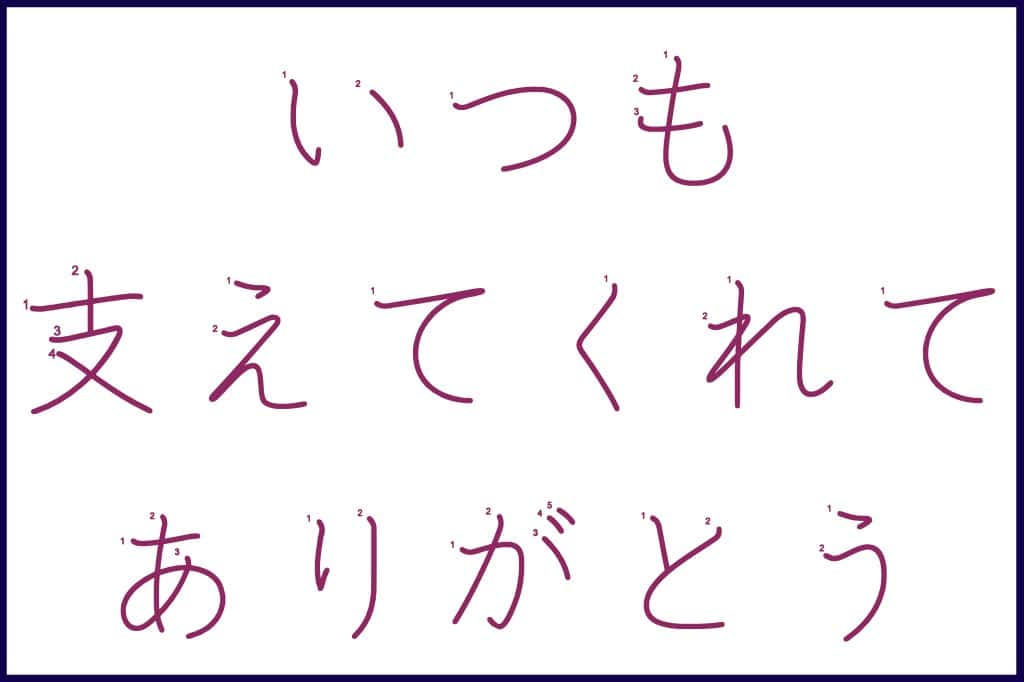
いつも支えてくれてありがとう
1.1 漢字 (Kanji)
いつも 支えて くれて ありがとう
1.2 カナ (Kana)
- いつも
- 支えて (ささえて)
- くれて
- ありがとう
1.3 ローマ字 (Romaji)
- いつも (itsumo)
- 支えて (sasaete)
ささえて - くれて (kurete)
- ありがとう (arigatou)
Step 2) Study Japanese Words and Their Meanings
English Translation
- Thanks for always supporting me.
- Thanks for your constant support.
- Thanks for always being there for me.
- Thanks for supporting me all the time.
- Thanks for all your continued support.
- I’m grateful for your constant support.
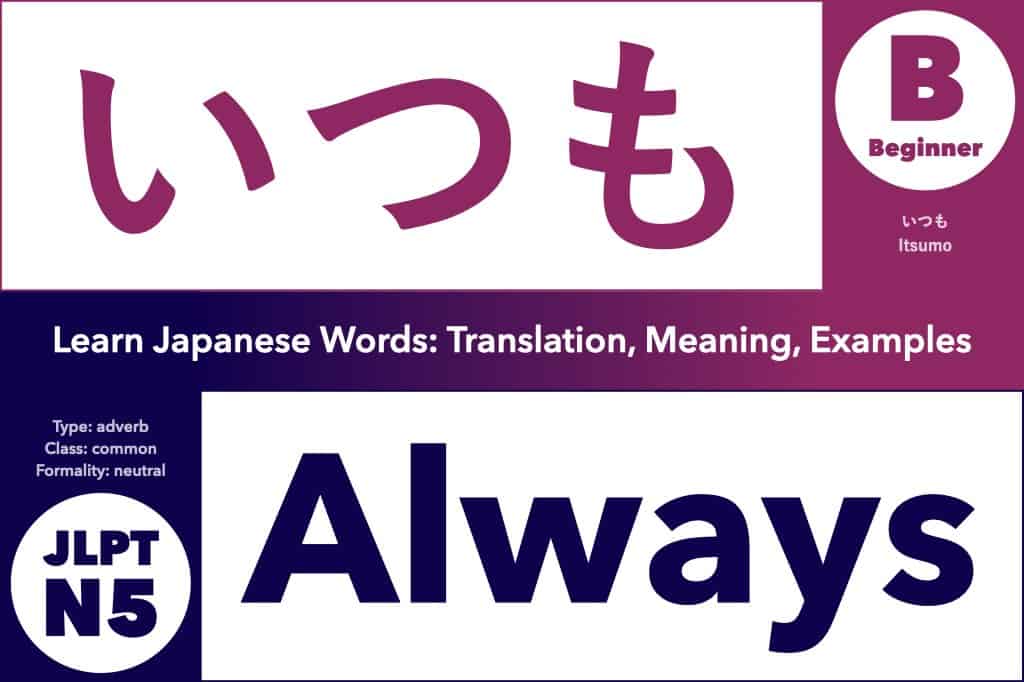
2.1 いつも (itsumo)
- Word: いつも
- Word Type: adverb
- Word Class: common, JLPT N5
- Word Formality: neutral, general use
| いつも |
|---|
| [adverb] always, all the time, at all times, constantly |
いつも (itsumo) means “always” or “all the time“.
It is placed before a verb or action to describe actions, states, or situations that happen regularly, repeatedly, or continuously over time.
The adverb can refer to daily habits or long-term behavior, and it is often used to express emotional consistency, such as a stable feeling, attitude, or relationship, rather than just factual repetition.
2.2 支えて (ささえて, sasaete)
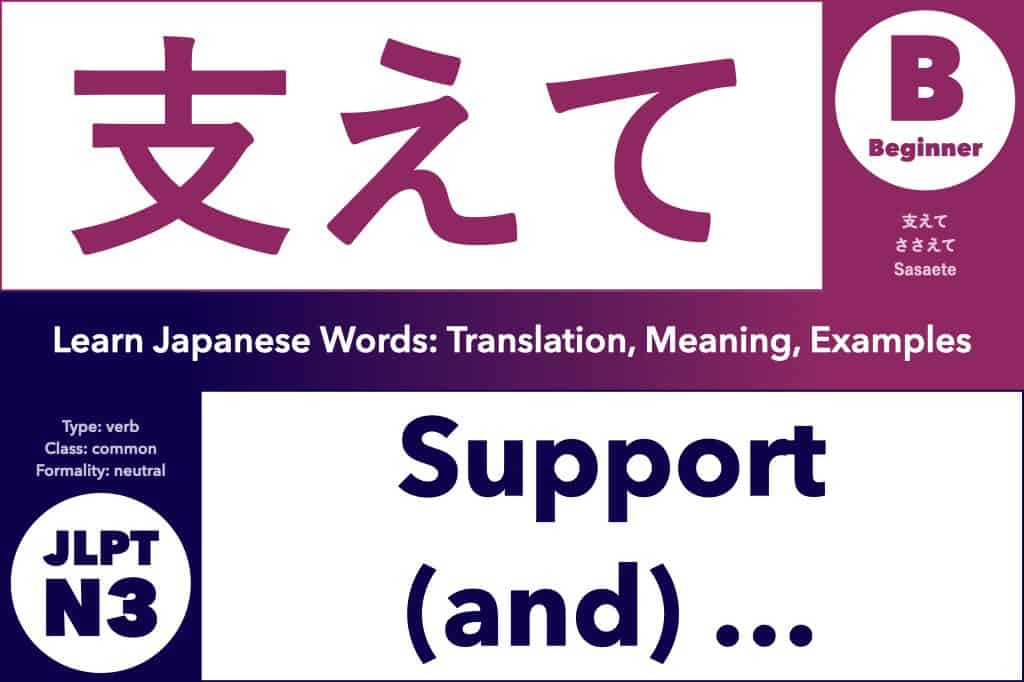
- Word: 支えて
- Reading: ささえて
- Word Type: verb (te-form)
- Word Class: common, JLPT N3
- Word Formality: neutral, general use
| 支えて |
|---|
| 支える → 支えて |
| [verb (te-form)] support (and) …, sustain (and) …, help (and) …, prob (and) …, underlay (and) …, hold someone up (and) …, defend (and) … |
支えて (ささえて, sasaete) means “support (and) …“, “help (and) …“, or “hold someone up (and) …“.
It is the te-form of the verb 支える (ささえる, sasaeru, “to support”).
- 支える (dictionary form)
- 支えた (past tense 〜た)
- 支えて (te-form 〜て)
This Japanese word can refer to physical support, such as supporting someone’s weight, holding something up, or preventing something from falling.
However, in modern Japanese, it is most often used metaphorically to express emotional support, mental encouragement, or standing by someone during difficult times.
Especially in idol or fan-related contexts, 支える almost always implies emotional encouragement, loyalty, and cheering for or believing in someone.
In Chanmina’s example sentence, 支えて is in the te-form, which is one of the most important verb forms in Japanese.
The te-form works like a hook and is used to connect actions, link verbs together, or combine with helper words such as くれる (kureru) and other grammar patterns.
Since the te-form has so many functions, it doesn’t have a fixed English translation. You can loosely think of it as meaning “(and) …” or “by doing…“, with the full meaning and translation depending on what follows.
When the te-form appears at the end of a sentence, it can also function as a command, meaning “Support (me)!” or “Hold (it)!“.
You will encounter the te-form a lot in Japanese, so don’t try to understand or remember everything at once. For now, the most important thing to remember is that it works like a hook.
2.4 くれて (kurete)
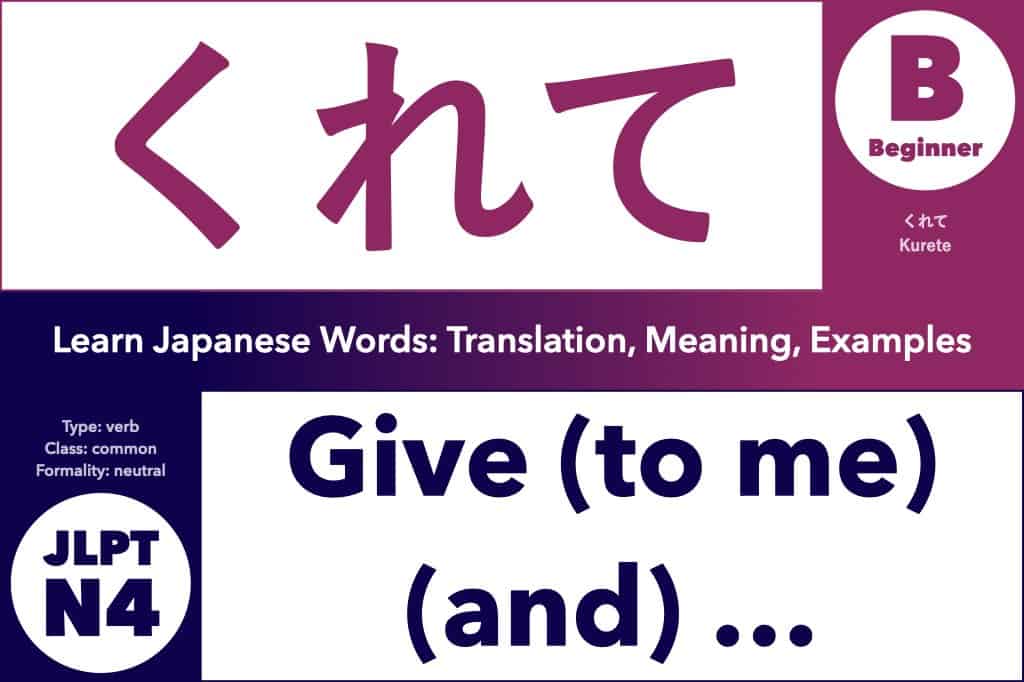
- Word: くれて
- Word Type: verb (te-form)
- Word Class: common, JLPT N4
- Word Formality: neutral, general use
| くれて |
|---|
| くれる → くれて |
| [verb (te-form)] give (to one) (and) …, let (one) have (and) …, kindly provide something (for one) (and) … |
| [〜て + verb (〜てくれる)] to do … for one, do … for someone’s sake, do one a favor by doing …, to take the trouble to do … |
くれて (kurete) means “give (to one) (and) …“, “let (one) have (and) …“, or “kindly provide something (for one) (and) …“.
It is the te-form of the verb くれる (kureru, “to give”).
- くれる (dictionary form)
- くれた (past tense 〜た)
- くれて (te-form 〜て)
In its basic use, くれる describes a situation where another person does something generous for the speaker (or for someone the speaker feels emotionally close to).
When someone gives you a present, offers help, or supports you, くれる is used to show that the action was done for your benefit.
Unlike the English verb “give“, くれる is used only when the receiver is the speaker or someone the speaker feels close to.
The focus of くれる is not on the giver, but on the receiver and the benefit they receive. Because of this, it naturally carries a feeling of kindness, consideration, and gratitude.
One of the most important uses of くれる is when it appears after a verb in the te-form, as in 〜てくれる (~te kureru).
In this structure, it no longer simply means “to give“. Instead, it expresses that someone kindly did an action for the speaker’s benefit. This usage highlights the effort, care, or emotional support behind the action rather than the action itself.
For example, the phrase 支えてくれる (ささえて くれる, sasaete kureru) can be translated and interpreted as “support me“, “support me for my sake“, “do me a favor by supporting me“, or “take the trouble to support me“.
All of these translations share an implied feeling of kindness, emotional backing, and appreciation. They show that the support was given to Chanmina and that she emotionally acknowledges and values it.
This is why 〜てくれる is extremely common in fan messages, idol posts, and emotional expressions, where speakers want to show appreciation for ongoing support, encouragement, or fan loyalty.
Finally, in Chanmina’s example sentence, くれて appears in the te-form, just like 支えて (ささえて, sasaete). Just like before, it works like a hook, connecting the supportive action to the next word in the sentence.
2.5 ありがとう (arigatou)
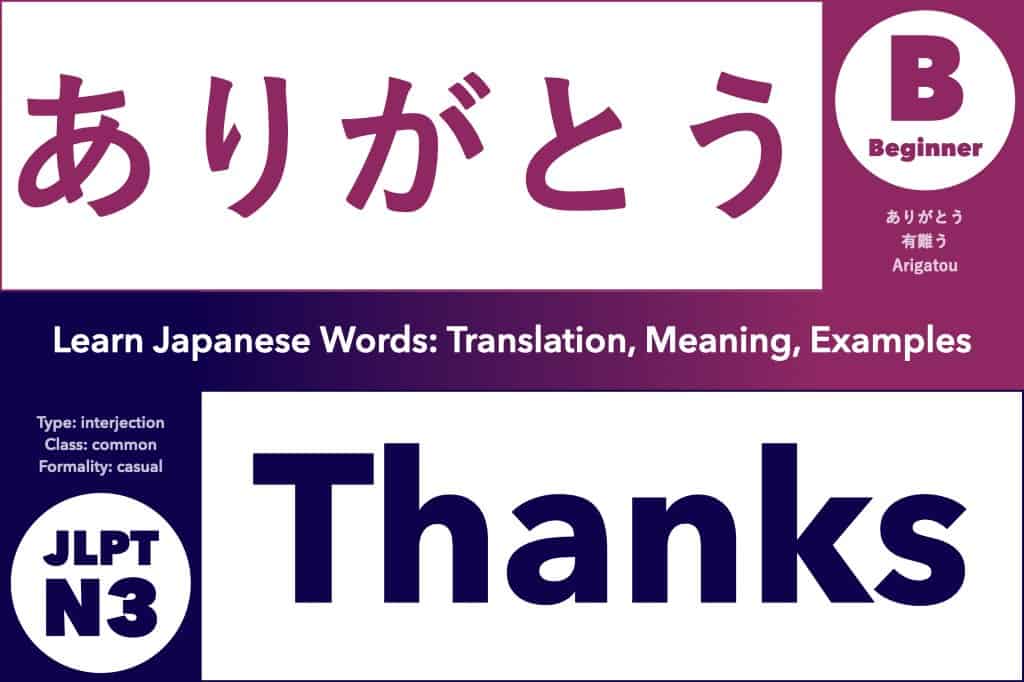
- Word: ありがとう
- Word Type: set phrase
- Word Class: common, JLPT N3
- Word Formality: casual language
| ありがとう |
|---|
| [interjection] thanks, thank you |
ありがとう (arigatou) means “thanks” or “thank you“.
It is one of the most common and important words in Japanese and is used to express gratitude, appreciation, and emotional acknowledgment toward someone.
You use ありがとう when you want to thank someone for something they did for you, something they gave you, or the feelings and effort they showed. It can be used for both small, everyday actions and when someone has your back.
Because ありがとう is a casual expression of gratitude, it is most commonly used with friends, family members, and people you feel close to.
In Japanese, when you thank someone for an action they did for you, you usually describe the action first and then say thank you. This is why the verb often appears in the te-form + ありがとう. Like this, you can clearly express what you are thankful for, not just that you are thankful.
The more polite and formal version used in official situations, customer service, or when speaking to people you are not close to is ありがとうございます (arigatou gozaimasu).
🔁 Review Note: I covered ありがとうございました (arigatou gozaimashita) in Lesson 2, “Learn Japanese with J-Pop Stars #2“. You can check out the word explanation or revisit the lesson if you would like a deeper understanding of its meaning, usage, and nuance.
いつも支えてくれてありがとう
With this sentence, Chanmina is directly expressing heartfelt gratitude to her fans and to everyone who has continually supported her. She is acknowledging and thanking them for their ongoing, long-term support. The sentence feels warm, intimate, and emotionally open, as if she views her supporters not simply as distant fans, but as people close to her who have stood by her through everything.
Step 3) Review and Improve Your Japanese
How to learn Japanese fast:
- Review sentences and words regularly
- Listen, read, speak, and write in Japanese
- Continue to the next sentence and repeat
3.1 Review & Remember Japanese With Flashcards
Create Sentence Flashcard for:
- いつも支えてくれてありがとう
Create Word Flashcards for:
- いつも
- 支えて
- くれて
- ありがとう
Examples
Front: Japanese sentence/word written in kanji
Back: Kana, translations, any other information
| My Sentence Flashcard |
|---|
| Front: いつも支えてくれてありがとう |
| Back: いつも支えて (ささえて) くれてありがとう Thanks for always supporting me. Thanks for your constant support. Thanks for supporting me all the time. |
| My Word Flashcard |
|---|
| Front: 支えて |
| Back: 支えて (ささえて) support (and) …, sustain (and) …, help (and) …, prob (and) …, underlay (and) …, hold someone up (and) …, defend (and) … |
3.2 Practice & Level Up Your Japanese Skills
How to improve your Japanese skills fast:
- Reading: Read Japanese for 5-10 min
- Writing: Write in Japanese for 5-10 min
- Speaking: Speak Japanese for 5-10 min
- Listening: Listen to Japanese for 5-10 min
A) Listening Practice
Listen to this song.
Can you catch the Japanese we learned today?
Source: HOME MADE 家族 〜 サンキュー!!
B) Reading Practice
Read the following sentences.
Can you spot the Japanese we learned today?
- これからも、最後まで支えてください。
- ライブに来て (きて) くれてありがとう。
- フェスの最後まで支えてくれてありがとう。
- 誕生日パーティーに来てくれてありがとう!
- ファンのみなさん、いつも支えてくれてありがとう。
- 最後まで一緒に (いっしょに) いてくれてありがとう。
- 最高 (さいこう) の思い出を作って (つくって) くれてありがとうございます。
You can also try to read Chanmina‘s IG post.
C) Speaking Practice
Say the following sentences.
Can you repeat them aloud without looking?
- 夏 を ありがとう❤️🔥❤️🔥❤️🔥
- 来て (きて) くれてありがとう!
- いつも みんな ありがとう ございます🥹💖
- ロイヤル ファミリー の みんな、ありがとう💝
- この ツアー を 支えて きた スタッフさん ありがとう
- 本当 (ほんとう) 来て (きて) くれてありがとうございました💜💜
- リプ くれて びっくり しました😂ありがとう ございます😭🙏🏻🔥💋
D) Writing Practice
Type (or write down) the words and sentences in Japanese.
3.3 Continue Studying Japanese
You’ve completed Learn Japanese with J-Pop Stars #6 🎉
You’re one step closer to understanding and communicating with Chanmina in Japanese!
- Japanese Words +4
- Japanese Sentences +1
Well done ♪٩(⌒‐⌒)۶♪
| Our Next Goal |
|---|
| Japanese Sentences 6 / 10 |
| Japanese Words 22 / 20 |
| 🎊おめでとう🎊 You reached your next vocab goal! 🎉٩(⌒ω⌒)੭⁾⁾🎉 |
| Our Ultimate Goal |
|---|
| Japanese Sentences 6 / 10,000 |
| Japanese Words 22 / 25,000 |
To reach native fluency, our goal is to master 10,000 sentences and 25,000 words.
So let’s keep studying and continue our journey to Japanese fluency!
➡️ Next Lesson: Learn Japanese with J-Pop Stars #7
⬅️ Need a quick review? Revisit the previous lesson!
▶️ New here? Start from Lesson 1!
… or keep learning Japanese with one of my other free lessons!
- 📺 Learn Japanese with Anime
Understand anime dialogue without subtitles - 📖 Learn Japanese with Manga
Read your favourite manga written in kanji and kana - 🎵 Learn Japanese with Songs
Understand the meaning behind your favourite lyrics
🎤 Learn Japanese with J-Pop Stars
Learn real Japanese from your favourite stars and idols - 🎮 Learn Japanese with Video Games
Understand game dialogue and the characters you love
For more information about the artists, please visit Chanmina’s Official Homepage or YouTube Channel.