
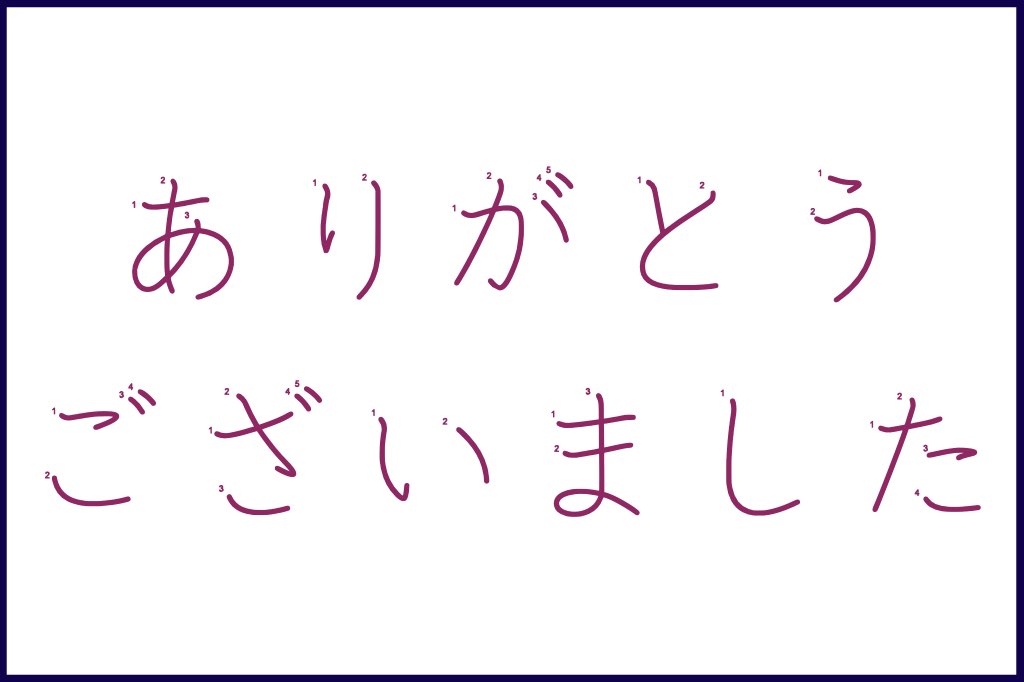
ありがとうございました (arigatou gozaimashita) means “thank you (for what you did).” It’s the past polite form of ありがとうございます (arigatou gozaimasu), which is the basic Japanese phrase for “thank you.” It expresses gratitude for something that has already been done or completed and is more polite than ありがとう.
ありがとうございました
arigatou gozaimashita
thank you (for what you did)
In this post, you will find all the translations and meanings of ありがとうございました (arigatou gozaimashita) and learn how to use this polite expression of gratitude naturally in real-life situations. I’ll share many example sentences so you can confidently thank someone for something already done, just like a native speaker.
ありがとうございました Means “Thank You (for what you did)” in Japanese
Word: ありがとうございました
Romaji: arigatou gozaimashita
Meaning: thank you (for what you did)
Type: set phrase (past)
Class: common, JLPT N5
Formality: polite, formal language
Dictionary Form: ありがとうございます (arigatou gozaimasu, “thank you”)
1. English Translations of ありがとうございました
| ありがとうございました |
|---|
| ありがとうございます → ありがとうございました |
| [set phrase] thank you very much, thank you (for what you did), I really appreciate (what you did) |
2. Japanese Meaning of ありがとうございました
ありがとうございました (arigatou gozaimashita) is the past polite form of ありがとうございます (arigatou gozaimasu), the standard way to say “thank you” in Japanese.
It’s used to express gratitude for something that has already been done. It can be used for a favor, help, service, or kindness that happened in the past.
Because it uses the polite form 〜ました, it sounds respectful, formal, and is appropriate with strangers, customers, teachers, and in professional situations.
You will often hear it in daily life, such as when leaving a store or restaurant, finishing a lesson, or thanking someone for their time or support.
It is more polite than the casual ありがとう (arigatou) and more appropriate in situations requiring respect or distance. For ongoing or present actions, ありがとうございます (arigatou gozaimasu) is more natural.
3. How to Use ありがとうございました in a Sentence
- ありがとうございました!
- (event/occasion) ありがとうござひました!
- (event/occasion) をありがとうござひました!
Example Sentences
| 初ファンミーティングありがとうございました! |
|---|
| はつ ファン ミーティング ありがとう ございました! |
| Thank you for our first fan meeting! Thank you for (joining) our first fan meeting! |
| Hatsu fan miitingu arigatou gozaimashita! |
| Free Lesson: J-Pop Stars #2 (HANA, Yuri) |
More examples will be added in the future…