
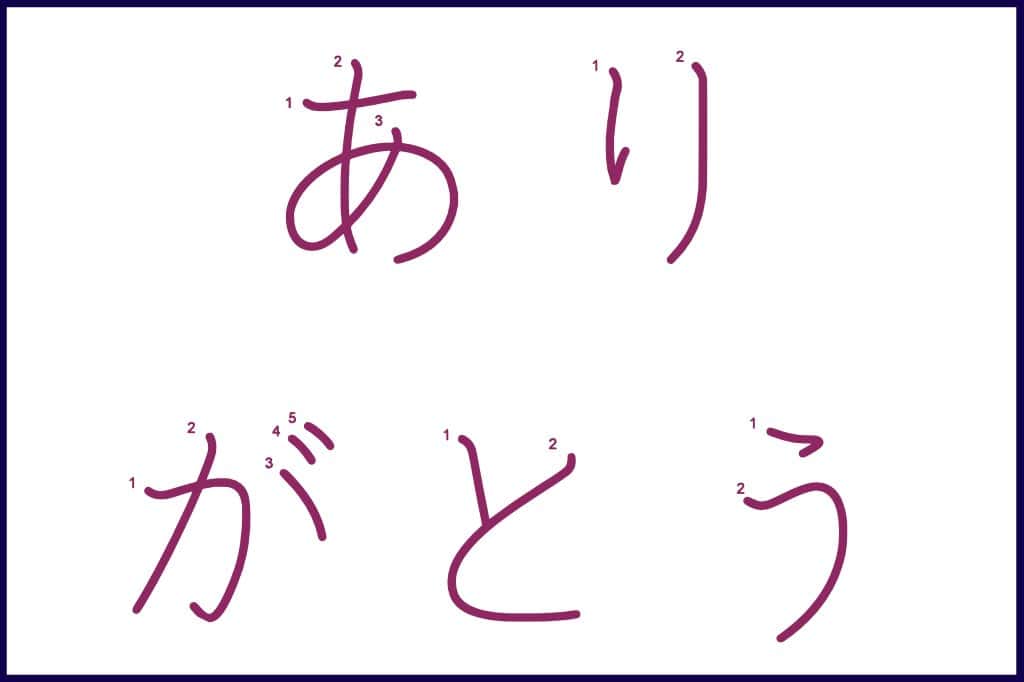
ありがとう (arigatou) means “thanks”. It’s a casual expression used with friends, family, or people close to you to show gratitude. It can follow a verb in the te-form (〜てありがとう) to say what you’re thankful for. The polite version is ありがとうございます (arigatou gozaimasu). It’s taught at the JLPT N3 level.
ありがとう
arigatou
thanks
In this post, you will learn the full meaning and common translations of the Japanese word ありがとう (arigatou) through real examples and in context. I will show you how to use ありがとう to express gratitude in casual, everyday Japanese, and share plenty of example sentences that will help you use ありがとう naturally, like a native speaker.
ありがとう Means “Thanks” in Japanese
Word: ありがとう
Romaji: arigatou
Meaning: thanks
Type: interjection
Class: common, JLPT N3
Formality: casual, informal language
1. English Translations of ありがとう
| ありがとう |
|---|
| [interjection] thanks, thank you |
2. Japanese Meaning of ありがとう
ありがとう (arigatou) means “thanks” or “thank you“.
It is one of the most common and important words in Japanese and is used to express gratitude, appreciation, and emotional acknowledgment toward someone.
At its core, ありがとう is used when you want to thank someone for something they did for you, something they gave you, or the care and effort they showed. It can be used for smaller, everyday actions as well as for deeper emotional support.
In Japanese, ありがとう often carries more emotional weight than a simple polite response. It shows that the speaker truly recognizes and values the other person’s kindness, action, or presence. In that sense, it is more than just a casual “thanks“.
The word comes from the older expression 有り難し (ありがたし, arigatashi), which translates as “what a blessing” or “how fortunate“. It literally means hard to exist and signifies that something rare was considered valuable. So the word naturally came to express gratitude for something meaningful or precious.
This is why ありがとう often sounds heartfelt in Japanese. It implies that the speaker feels genuinely thankful and fortunate.
You will often see ありがとう used after a verb in the te-form + ありがとう (〜てありがとう). This structure clearly shows what you are thankful for, not just that you are thankful.
Because ありがとう is a casual expression, it is most commonly used with friends, family members, and people you feel close to.
The more polite and formal version used in official situations, customer service, or when speaking to people you are not close to is ありがとうございます (arigatou gozaimasu).
When you specifically want to thank someone for something they have already done, or an event that is over, ありがとうございました (arigatou gozaimashita) is often used.
3. How to Use ありがとう in a Sentence
- ありがとう!
- (verb)て ありがとう
- ありがとうございます!
- (event/occasion) ありがとう!
- (event/occasion) をありがとう!
Example Sentences
| いつも支えてくれてありがとう |
|---|
| いつも ささえて くれて ありがとう |
| Thanks for always supporting me. Thanks for your constant support. |
| Itsumo sasaete kurete arigatou. |
| Free Lesson: J-Pop Stars #6 (Chanmina, ちゃんみな) |
More examples will be added in the future…