
閉幕 (へいまく, heimaku) means “falling of the curtain” or “the closing” of an event. It refers to the formal end of a festival, performance, or large gathering. The word carries a dignified, ceremonial nuance, as if gently lowering the curtain and marking the conclusion of an important occasion.
閉幕
へいまく
heimaku
falling of the curtain, (coming to an) end
In this post, you will discover the full meaning, uses, and nuances of 閉幕 (へいまく, heimaku). I will explain how this noun is used in Japanese to describe the formal closing of events or performances, and provide plenty of example sentences so you can use it naturally and confidently like a native speaker.
閉幕 Means “Falling of the Curtain” in Japanese
Word: 閉幕
Kana: へいまく
Romaji: heimaku
Meaning: falling of the curtain
Type: noun
Class: common, JLPT N4
Formality: neutral, general use
1. English Translations of 閉幕
| 閉幕 |
|---|
| [noun] falling of the curtain, the closing of (an event), (coming to an) end, close |
| [nounする] the curtain falls, to draw the curtain on, to close the curtain on, to bring down the curtain on to come to an end, to come to a close |
2. Japanese Meaning of 閉幕
閉幕 (へいまく, heimaku) means “falling of the curtain,” “closing of the curtain,” or “(coming to an) end.”
It is a formal noun made up of the kanji 閉 for “close” and 幕 for “curtain,” and its literal image is that of a curtain being drawn shut.
In modern Japanese, 閉幕 is most often used metaphorically to describe the official ending of large-scale events, such as festivals, concerts, competitions, ceremonies, or long-running projects. Rather than simply meaning “the end,” it implies a planned, public, and meaningful conclusion.
Because of this, the word carries a dignified and ceremonial tone and is rarely used in everyday, casual situations.
Like with other nouns, 閉幕 can take either the polite copula です (desu) or the casual copula だ (da). Using です makes your sentence sound more formal, polite, or respectful. Using だ sounds more casual, direct, and natural in everyday conversation with close friends and family.
- Formal situations: 閉幕です
- Casual situations: 閉幕だ
Like many two-kanji nouns in Japanese, 閉幕 can become a verb by adding する (suru, “to do”), forming a so-called suru verb.
閉幕する (へいまく する, heimaku suru) means “to draw the curtain on,” “to close the curtain on,” or “to come to an end.”
It describes the formal conclusion of an event, much like “to conclude,” “to wrap up,” or “to formally close” in English.
Grammatically, 閉幕する is an intransitive verb, and the event itself is marked with が.
3. How to Use 最後 in a Sentence
- 閉幕は (sentence)。
- 閉幕が (sentence)。
- (sentence) 閉幕だ。
- (sentence) 閉幕です。
- (sentence) が閉幕する。
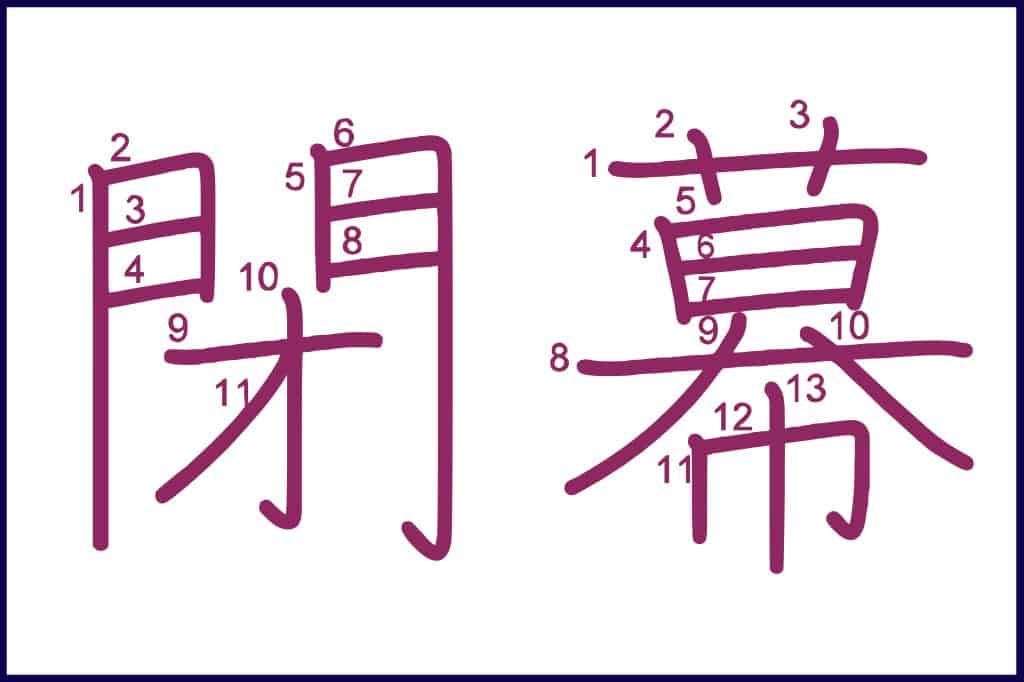
Example Sentences
More examples will be added in the future…
Specific Example Sentences for 閉幕する
| BMSG FES 25が閉幕しました。 |
|---|
| BMSG フェス にじゅうご が へいまく しました。 |
| BMSG FES 25 has come to an end. The curtain has fallen on BMSG FES 25. The curtain has closed on BMSG FES 25. |
| BMSG fesu nijyuugo ga heimaku shimashita. |
| Free Lesson: J-Pop Stars #5 (SKY-HI) |
⏩ Need more examples? Go to 閉幕する (へいまく する, heimaku suru)!