
Are you a Jujutsu Kaisen fan who wants to learn Japanese with anime you love? In Lesson 1 of this series, I translate a real Japanese sentence spoken by Yuji Itadori, breaking down the words, grammar, and tone in a clear and beginner-friendly way.
本当にいいんすね?
By the end of this Japanese lesson, you will be able to read and fully understand what Yuji is saying here, while also practising all the Japanese skills you need to watch anime in Japanese and understand quotes of your favourite characters. It’s the perfect lesson for Jujutsu Kaisen fans, anime lovers, and beginners who want to learn Japanese in a fun and natural way.
So let’s start learning Japanese with the Jujutsu Kaisen (呪術廻戦) anime!
Learn Japanese with Anime #1 (Jujutsu Kaisen, Yuji)
⏳ Study Time: 5-10 min
How to study Japanese by yourself:
- Read a Japanese sentence aloud
- Break down its words and meanings
- Review and level up your Japanese skills
Step 1) Learn to Read Japanese Sentences and Kanji
日本語
本当にいいんすね?
1.1 漢字 (Kanji)
本当に いい んす ね?
1.2 カナ (Kana)
- 本当に (ほんとう に)
- いい
- んす
- ね
1.3 ローマ字 (Romaji)
- 本当に (hontou ni)
ほんとう に - いい (ii)
- んす (n su)
- ね (ne)
Step 2) Study Japanese Words and Their Meanings
English Translation
- It’s really okay, isn’t it?
- So it’s really fine, yeah?
- It’s really alright, isn’t it?
- You’re sure this is okay, yeah?
- We’re really good to go, right?
- Just to be clear, it’s okay, yeah?
- This is really fine with you, right?
- You’re really okay with this, right?
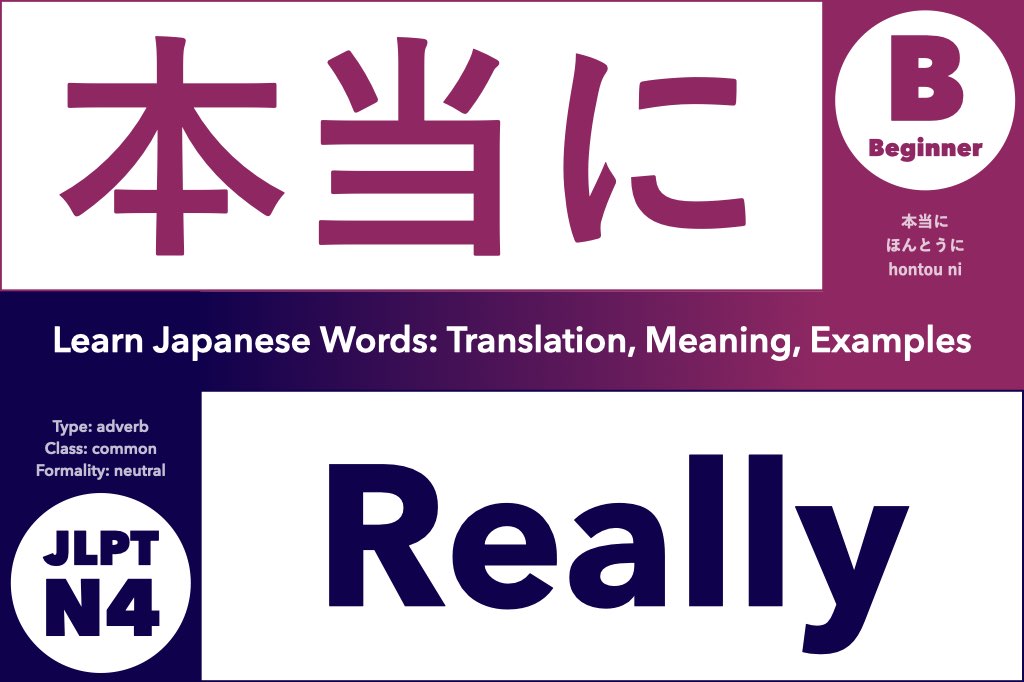
2.1 本当に (hontou ni)
- Word: 本当に
- Reading: ほんとうに
- Word Type: adverb
- Word Class: common, JLPT N4
- Word Formality: neutral, general use
| 本当に |
|---|
| [adverb] really, truly, very, genuinely |
本当に (hontou ni) means “really“, “truly” or “very“.
It is an adverb used to emphasise that something is genuine, sincere, or exactly as stated.
Speakers often use 本当に to express their true feelings, confirmation, or sincerity, and it is commonly used when reacting with surprise, reassurance, doubt, or strong emotion.
In casual conversation, it is often used to check or confirm something the speaker is unsure about.
2.2 いい (ii)
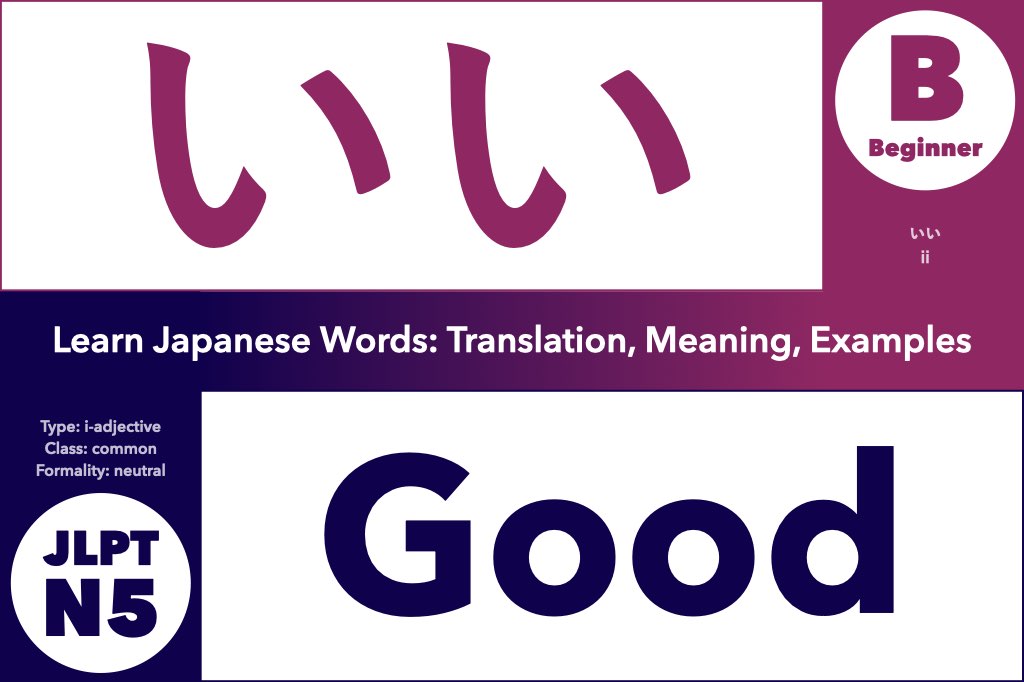
- Word: いい
- Word Type: adjective
- Word Class: common, JLPT N5
- Word Formality: neutral, general use
| いい |
|---|
| [adjective] good, fine, nice, excellent, pleasant, acceptable, agreeable |
| [adjective] sufficient, enough, ready, prepared |
いい (ii) means “good“, “okay“, “fine“, or “acceptable“.
It is an adjective used to express approval, permission, or a positive evaluation of a situation.
Depending on context, いい can mean that something is morally good, convenient, allowed, or simply satisfactory.
In spoken Japanese, いい is extremely flexible and often replaces longer expressions like “that’s fine”, “that works”, or “I’m okay with it“.
In Yuji Itadori‘s sentence, いい means “okay” in the sense of permission or approval. He is asking whether it is acceptable to proceed.
いい is one of the most common Japanese words and i-adjectives.
2.3 んす (n su)
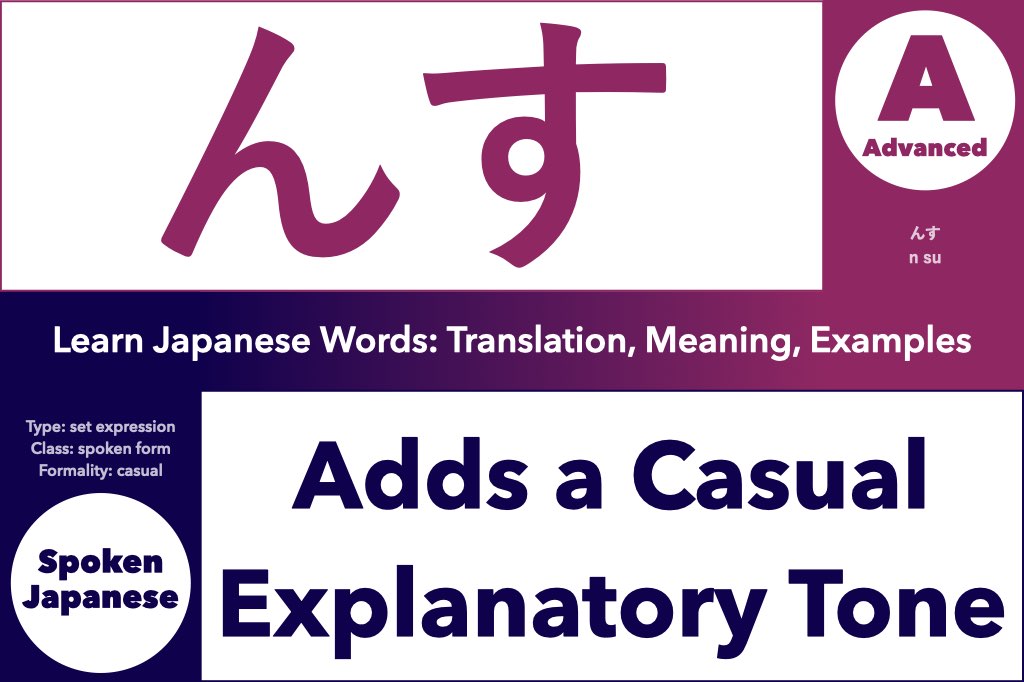
- Word: んす
- Word Type: set expression
- Word Class: spoken contraction
- Word Formality: very casual language
| んす |
|---|
| [expression] the expectation is that …, the explanation is that …, it is that …, the reason is that …, the fact is that … used to soften statements, seek confirmation, or add an explanatory tone |
んす (n su) is a casual spoken contraction that softens statements, seeks confirmation, or adds an explanatory tone.
It comes from のです (no desu), and is commonly used in spoken Japanese and relaxed conversations by young men.
- のです (standard Japanese)
- んです (spoken Japanese)
- んす (very casual Japanese)
In casual speech, の is shortened to ん, and です is shortened to す (or っす), creating んす. It sounds less stiff than んです (n desu) but more polite than dropping it entirely.
んす is rarely used in writing. You might encounter or hear it among friends, juniors speaking to seniors in very casual settings, or in anime and manga dialogue.
Depending on tone and context, it can either sound friendly and laid-back or slightly rough and rude.
2.4 ね (ne)
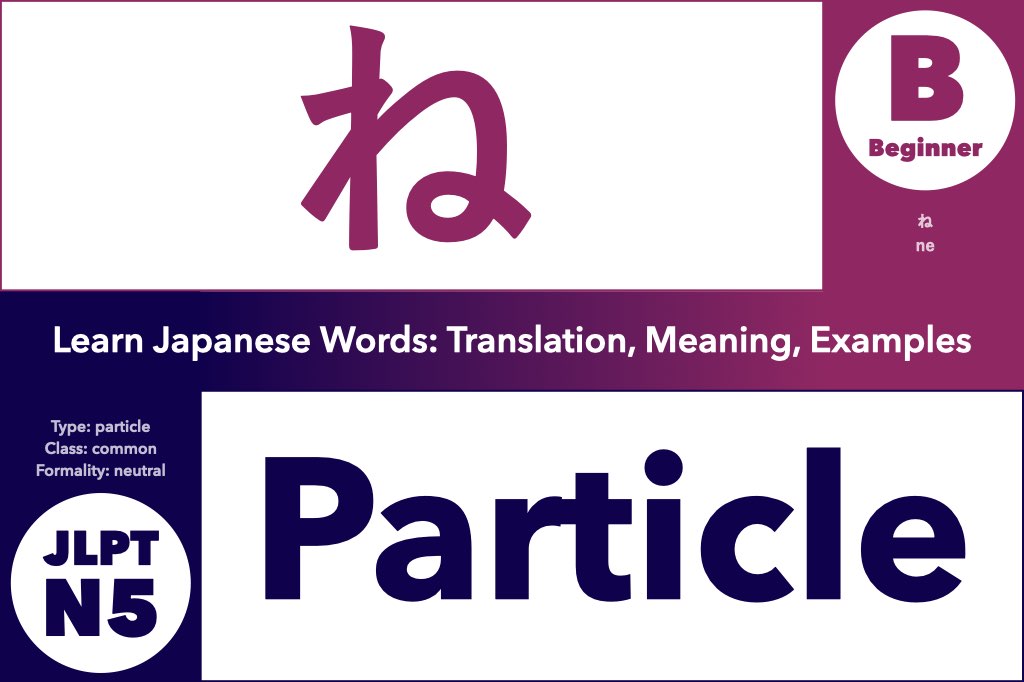
- Word: ね
- Word Type: particle
- Word Class: common, JLPT N5
- Word Formality: neutral, general use
| ね |
|---|
| [particle (sentence-ending)] …right? …isn’t it? …you agree, right? used as a request for confirmation or agreement |
ね (ne) is a sentence-ending particle meaning “…right?” or “…isn’t it?“. It is used to seek agreement, confirmation, or shared understanding.
It softens the sentence and makes it sound more conversational and friendly, very similar to English expressions like “right?”, “isn’t it?”, or “you know?”.
Rather than stating something firmly, ね invites the listener to agree or confirm, showing that the speaker assumes the listener feels the same.
Or it shows that the speaker wants reassurance from the listener before acting.
ね is extremely common in both casual and polite Japanese and helps make speech sound softer, friendlier, and more natural.
本当にいいんすね?
With this line, Yuji Itadori (Jujutsu Kaisen) is casually asking for final confirmation, checking with the others to make sure it’s really okay to proceed.
His wording shows that he wants to confirm the other people are genuinely comfortable with what’s about to happen, and his tone comes across as relaxed, friendly, and slightly boyish.
Step 3) Review and Improve Your Japanese
How to learn Japanese fast:
- Review sentences and words regularly
- Listen, read, speak, and write in Japanese
- Continue to the next sentence and repeat
3.1 Review & Remember Japanese With Flashcards
Create Sentence Flashcard for:
- 本当にいいんすね?
Create Word Flashcards for:
- 本当に
- いい
- んす
- ね
Examples
Front: Japanese sentence/word written in kanji
Back: Kana, translations, any other information
| My Sentence Flashcard |
|---|
| Front: 本当にいいんすね? |
| Back: 本当に (ほんとうに) いいんすね? It’s really okay, isn’t it? You’re sure this is okay, yeah? We’re really good to go, right? Just to be clear, it’s okay, yeah? You’re really okay with this, right? |
| My Word Flashcard |
|---|
| Front: んす |
| Back: んす used to soften statements, seek confirmation, or add an explanatory tone casual spoken form of のです のです → んです → んす |
3.2 Practice & Level Up Your Japanese Skills
How to improve your Japanese skills fast:
- Reading: Read Japanese for 5-10 min
- Writing: Write in Japanese for 5-10 min
- Speaking: Speak Japanese for 5-10 min
- Listening: Listen to Japanese for 5-10 min
A) Listening Practice
Listen to this song.
Can you catch the Japanese we learned today?
Source: CIVILIAN 〜 ハロ/ハワユ
B) Reading Practice
Read the following sentences.
Can you spot the Japanese we learned today?
- アニメ は いいね!
- 本当に 行く (いく)?
- それ は いい です ね。
- マンガ も いい んです ね!
- この マンガ、いい です ね。
- 本当に 面白い (おもしろい) ね!
- 本当に 楽しかった (たのしかった) !
- この アニメ 本当に 好き (すき) です。
- 呪術廻戦 (じゅじゅつ かいせん) は いいんすね!
- 虎杖悠仁 (いたどり ゆうじ) は 本当に かっこいい!
C) Speaking Practice
Say the following sentences.
Can you repeat them aloud without looking?
- いいね!
- 本当に?
- いいんす よ!
- いい です ね!
- 本当にいい です か?
- アニメ は いいんすね!
- 本当に よかった です!
- 本当に きれい でした!
- これ で いい んです か?
- 日本 (にほん) は 本当にいい です ね!
D) Writing Practice
Type (or write down) the words and sentences in Japanese.
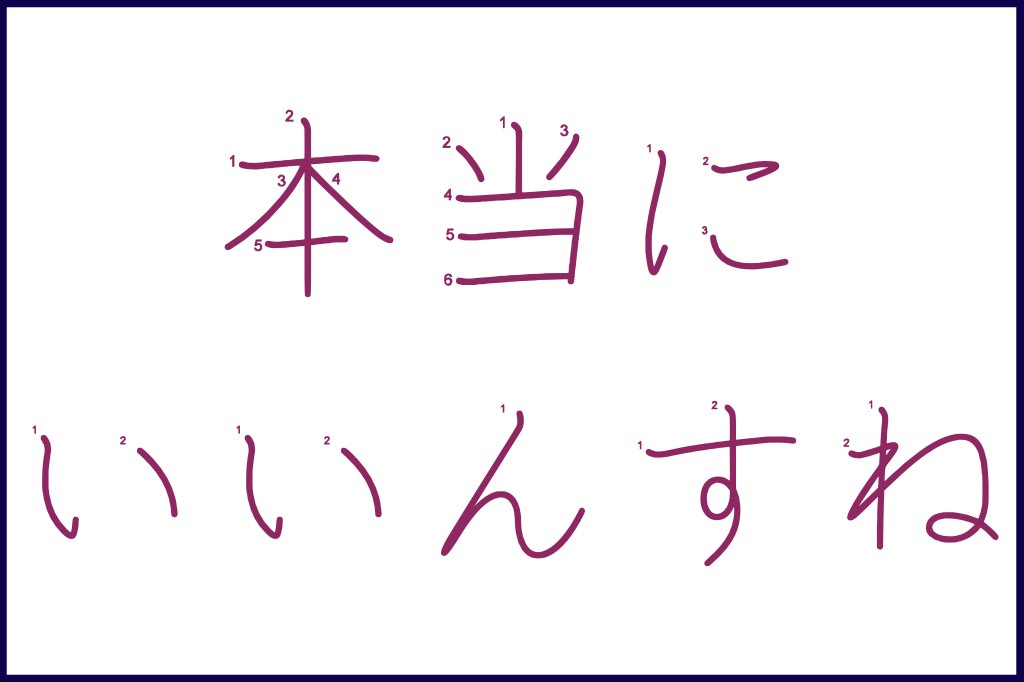
3.3 Continue Studying Japanese
You have completed Learn Japanese with Anime #1 🎉
You’re one step closer to understanding anime and watching Jujutsu Kaisen in Japanese!
- Japanese Words +4
- Japanese Sentences +1
Well done ♪٩(⌒‐⌒)۶♪
| Our First Goal |
|---|
| Japanese Sentences 1 / 10 |
| Japanese Words 4 / 10 |
| Our Ultimate Goal |
|---|
| Japanese Sentences 1 / 10,000 |
| Japanese Words 4 / 25,000 |
To reach native fluency, our goal is to master 10,000 sentences and 25,000 words.
So let’s keep studying and continue our journey to Japanese fluency!
➡️ Next Lesson: Learn Japanese with Anime #2
… or keep learning Japanese with one of my other free lessons!
- 📺 Learn Japanese with Anime
Understand anime dialogue without subtitles - 📖 Learn Japanese with Manga
Read your favourite manga written in kanji and kana - 🎵 Learn Japanese with Songs
Understand the meaning behind your favourite lyrics
🎤 Learn Japanese with J-Pop Stars
Learn real Japanese from your favourite stars and idols - 🎮 Learn Japanese with Video Games
Understand game dialogue and the characters you love
For more information about the anime, please visit Jujutsu Kaisen’s Official Homepage or YouTube Playlist.