
Are you an Attack on Titan (進撃の巨人) fan who wants to learn Japanese with anime you love? In Lesson 2, I translate a real Japanese sentence spoken by Mikasa Ackerman, breaking down the words, grammar, and tone in a clear and beginner-friendly way.
そろそろ帰ろう
By the end of this Japanese lesson, you will be able to read and fully understand what Mikasa is saying here, while also practising all the Japanese skills you need to watch anime in Japanese and understand quotes of your favourite characters. It’s the perfect lesson for Attack on Titan fans, anime lovers, and beginners who want to learn Japanese in a fun and natural way.
So let’s start learning Japanese with the Shingeki no Kyojin (進撃の巨人) anime!
Learn Japanese with Anime #2 (Attack on Titan, Mikasa)
⏳ Study Time: 5-10 min
How to study Japanese by yourself:
- Read a Japanese sentence aloud
- Break down its words and meanings
- Review and level up your Japanese skills
Step 1) Learn to Read Japanese Sentences and Kanji
日本語
そろそろ帰ろう
1.1 漢字 (Kanji)
そろそろ 帰ろう
1.2 カナ (Kana)
- そろそろ
- 帰ろう (かえろう)
1.3 ローマ字 (Romaji)
- そろそろ (soro soro)
- 帰ろう (kaerou)
かえろう
Step 2) Study Japanese Words and Their Meanings
English Translation
- Let’s head back home.
- It’s about time to go home.
- I think it’s time to go home.
- It’s about time we head back home.
- We should probably head home soon.
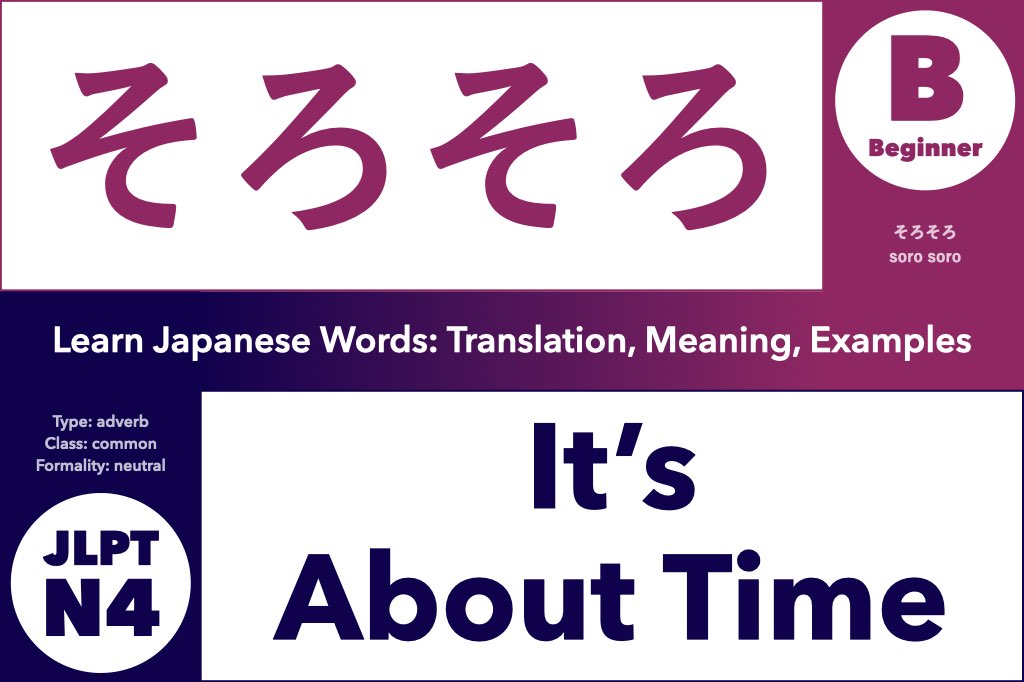
2.1 そろそろ (soro soro)
- Word: そろそろ
- Word Type: adverb
- Word Class: common, JLPT N4
- Word Formality: neutral, general use
| そろそろ |
|---|
| [adverb] soon, before long, any time now, it’s about time (to)… |
| [adverb] slowly, quietly, steadily, gradually |
そろそろ (soro soro) means “soon“, “about time“, or “gradually“.
It is an adverb used when something is expected to happen shortly, or when the speaker feels that the timing is right to take an action.
In everyday Japanese, そろそろ often appears before verbs like 行く (いく, iku, “to go”), 帰る (かえる, kaeru, “to go home”), 始める (はじめる, hajimeru, “to start”), or 寝る (ねる, neru, “to sleep”), and is commonly used to gently suggest a change or next step rather than stating it directly.
While そろそろ does not refer to an exact time, it conveys a natural sense of timing and situational awareness.
Because of this, it usually sounds soft, considerate, and natural in conversation, and is often used to ease into actions or signal that it may be time to move on.
2.2 帰ろう (かえろう, kaerou)
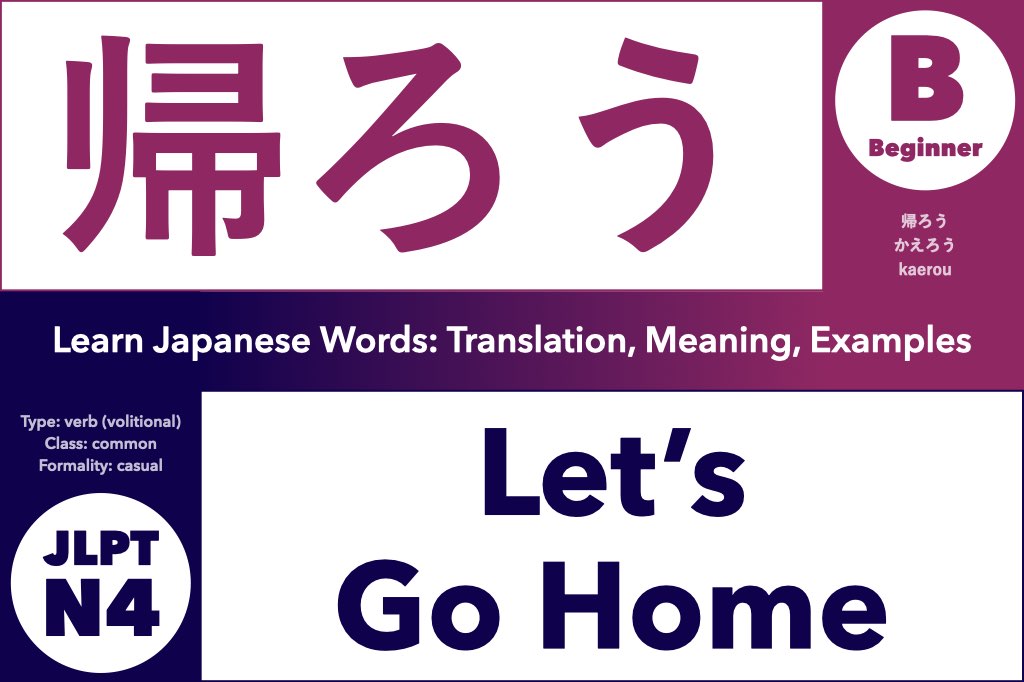
- Word: 帰ろう
- Reading: かえろう
- Word Type: verb (volitional)
- Word Class: common, JLPT N4
- Word Formality: informal, casual form
| 帰ろう |
|---|
| 帰る → 帰ろう |
| [verb (volitional)] let’s return, let’s go back, let’s go home |
帰ろう (かえろう, kaerou) means “let’s return” or “let’s go home“.
It is the casual volitional form of the verb 帰る (かえる, “to go home”), and is used to express the speaker’s intention or to gently suggest an action to others.
- 帰る (dictionary form)
- 帰ろう (volitional form 〜よう)
- 帰ります (polite present tense ~ます)
- 帰りましょう (polite volitional form 〜ましょう)
帰ろう is commonly used in relaxed, everyday conversations with friends, family, or people of the same social level. It feels personal and conversational.
It sounds natural, friendly, and non-forceful, making it ideal for suggestions rather than commands.
In polite situations, 帰りましょう (かえりましょう, kaerimashou) is more commonly used.
そろそろ帰ろう
With this sentence, Mikasa (Shingeki no Kyojin) is gently suggesting to Eren that it’stime for them to go home or head back to the city. Rather than rushing him or giving an order, she calmly guides the moment forward. Her wording is soft and considerate, reflecting Mikasa’s composed and thoughtful personality.
Step 3) Review and Improve Your Japanese
How to learn Japanese fast:
- Review sentences and words regularly
- Listen, read, speak, and write in Japanese
- Continue to the next sentence and repeat
3.1 Review & Remember Japanese With Flashcards
Create Sentence Flashcard for:
- そろそろ帰ろう
Create Word Flashcards for:
- そろそろ
- 帰ろう
Examples
Front: Japanese sentence/word written in kanji
Back: Kana, translations, any other information
| My Sentence Flashcard |
|---|
| Front: そろそろ帰ろう |
| Back: そろそろ 帰ろう (かえろう) Let’s head back home. It’s about time to go home. We should probably head home soon. |
| My Word Flashcard |
|---|
| Front: 帰ろう |
| Back: 帰ろう (かえろう) let’s return, let’s go back, let’s go home |
3.2 Practice & Level Up Your Japanese Skills
How to improve your Japanese skills fast:
- Reading: Read Japanese for 5-10 min
- Writing: Write in Japanese for 5-10 min
- Speaking: Speak Japanese for 5-10 min
- Listening: Listen to Japanese for 5-10 min
A) Listening Practice
Listen to this song.
Can you catch the Japanese we learned today?
Source: TRiFOLiUM 〜 オレンジ
B) Reading Practice
Read the following sentences.
Can you spot the Japanese we learned today?
- 帰ろうね。
- うち へ 帰ろう。
- 帰ろう、ミカサ!
- みんな で 帰ろう。
- 家 (いえ) に 帰ろう。
- そろそろ 時間 (じかん) だ。
- そろそろ 行く (いく) わ ね。
- そろそろ 仕事 (しごと) です。
- そろそろ 帰る (かえる) べき だ。
- そろそろ 帰りましょう (かえりましょう)
C) Speaking Practice
Say the following sentences.
Can you repeat them aloud without looking?
- 帰ろう。
- さあ 帰ろう。
- そろそろだね。
- もう帰ろうか?
- よし 帰ろう か。
- エレン、帰ろう。
- そろそろ 行こう (いこう) 。
- 一緒に (いっしょに) 帰ろう。
- 東京 (とうきょう) に 帰ろう。
- そろそろ 食べよう (たべよう)。
D) Writing Practice
Type (or write down) the words and sentences in Japanese.

3.3 Continue Studying Japanese
You have completed Learn Japanese with Anime #2 🎉
You’re one step closer to understanding anime and watching Attack on Titan in Japanese!
- Japanese Words +2
- Japanese Sentences +1
Well done ♪٩(⌒‐⌒)۶♪
| Our First Goal |
|---|
| Japanese Sentences 2 / 10 |
| Japanese Words 6 / 10 |
| Our Ultimate Goal |
|---|
| Japanese Sentences 2 / 10,000 |
| Japanese Words 6 / 25,000 |
To reach native fluency, our goal is to master 10,000 sentences and 25,000 words.
So let’s keep studying and continue our journey to Japanese fluency!
➡️ Next Lesson: Learn Japanese with Anime #3 (coming soon!)
▶️ New here? Start from Lesson 1!
… or keep learning Japanese with one of my other free lessons!
- 📺 Learn Japanese with Anime
Understand anime dialogue without subtitles - 📖 Learn Japanese with Manga
Read your favourite manga written in kanji and kana - 🎵 Learn Japanese with Songs
Understand the meaning behind your favourite lyrics
🎤 Learn Japanese with J-Pop Stars
Learn real Japanese from your favourite stars and idols - 🎮 Learn Japanese with Video Games
Understand game dialogue and the characters you love
For more information about the anime, please visit Attack on Titan’s Official Homepage or YouTube Playlist.