
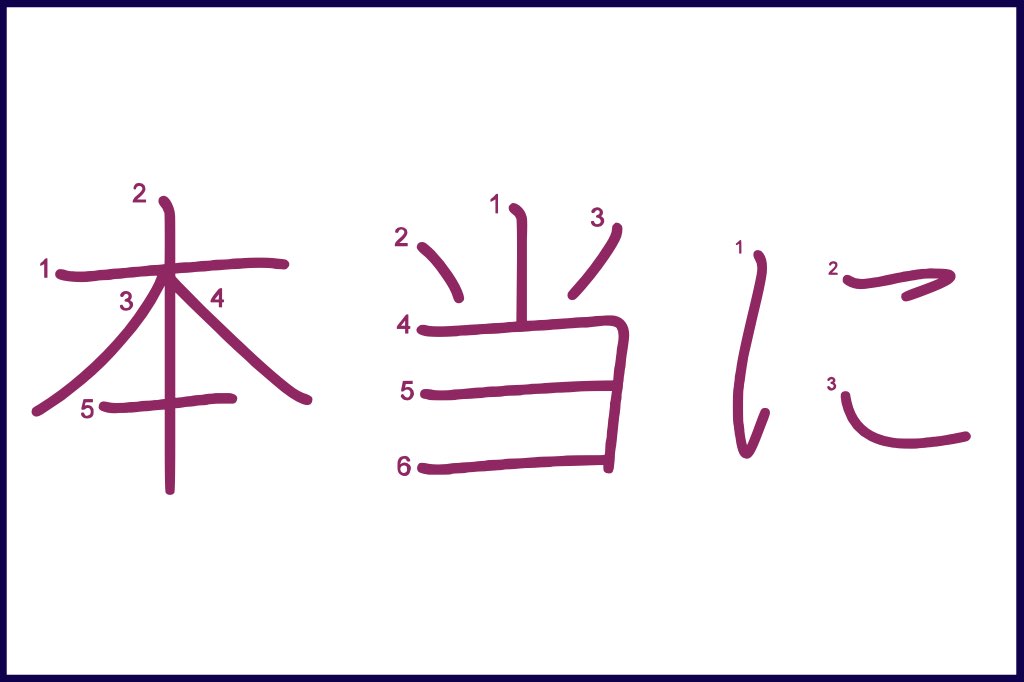
本当に (ほんとうに, hontou ni) means “really” or “truly“. It is an adverb that adds emphasis and sincerity to what the speaker is saying. In everyday Japanese, it is commonly used to confirm something, express surprise, show honest emotion, or add emotional weight, and is taught around the JLPT N4 level.
本当に
ほんとうに
hontou ni
really, truly, very
In this post, you will learn the full meaning and usage of the Japanese word 本当に (ほんとうに, hontou ni). I will explain how this common adverb is used in Japanese sentences and everyday Japanese, and provide plenty of examples to help you understand and use 本当に naturally and confidently.
本当に Means “Really” in Japanese
Word: 本当に
Kana: ほんとうに
Romaji: hontou ni
Meaning: really, truly, very
Type: adverb
Class: common, JLPT N4
Formality: neutral, general use
1. English Translations of 本当に
| 本当に |
|---|
| [adverb] really, truly, very, genuinely |
2. Japanese Meaning of 本当に
本当に (ほんとうに, hontou ni) means “really”, “truly”, or “very”.
It is an adverb used to emphasise that something is genuine, sincere, or exactly as stated.
When someone uses 本当に, they are showing that they believe something is true or that they feel strongly about it.
In everyday Japanese, 本当に is extremely common and appears in both casual and polite conversation.
It is often used to confirm information, express surprise, show honest emotion, or add emphasis to what is being said.
For example, in questions, 本当に can mean “Really?” or “Are you sure?”, while in statements it can strengthen feelings like gratitude, approval, or excitement.
Since Japanese often leaves emotions and intentions unstated, 本当に plays an important role in clarifying how strongly the speaker feels or how seriously something should be taken.
Core Meanings and Functions
1. Emphasising Truth or Reality
本当に is used to state that something is factually true or genuinely the case. In this sense, it often translates as “really” or “actually”. The speaker is asserting that something is not a misunderstanding, exaggeration, or joke.
2. Confirming or Checking Information
When used in questions, 本当に expresses doubt or a desire for confirmation. The speaker is asking whether something is truly correct or acceptable, often because they want reassurance before acting.
3. Expressing Strong Emotion or Sincerity
本当に is frequently used to show heartfelt feelings such as gratitude, relief, surprise, admiration, or frustration. Used like this, the word does not just add emphasis but also conveys emotional depth.
4. Strengthening Evaluations and Opinions
本当に can modify adjectives and verbs to make opinions sound stronger or more sincere. For example, it can intensify meanings like “good,” “fun,” “hard,” or “amazing,” similar to “really” or “very” in English.
3. How to Use 本当に in a Sentence
- 本当に?
- 本当に (verb)
- 本当に (adjective)
- 本当に (sentence)。
Example Sentences
| 本当にいいんすね? |
|---|
| ほんとう に いい ん す ね? |
| It’s really okay, isn’t it? We’re really good to go, right? Just to be clear, it’s okay, yeah? You’re really okay with this, right? |
| Hontou ni ii n su ne? |
| Free Lesson: Anime #1 (Jujutsu Kaisen, Yuji) |
More examples will be added in the future…