Every word lesson on the site lives here, pulled from real anime, games, and songs rather than a textbook list. Each one covers the meaning, the reading, how it compares to similar words, and real example sentences so you actually see it in use.
Recent Posts
-
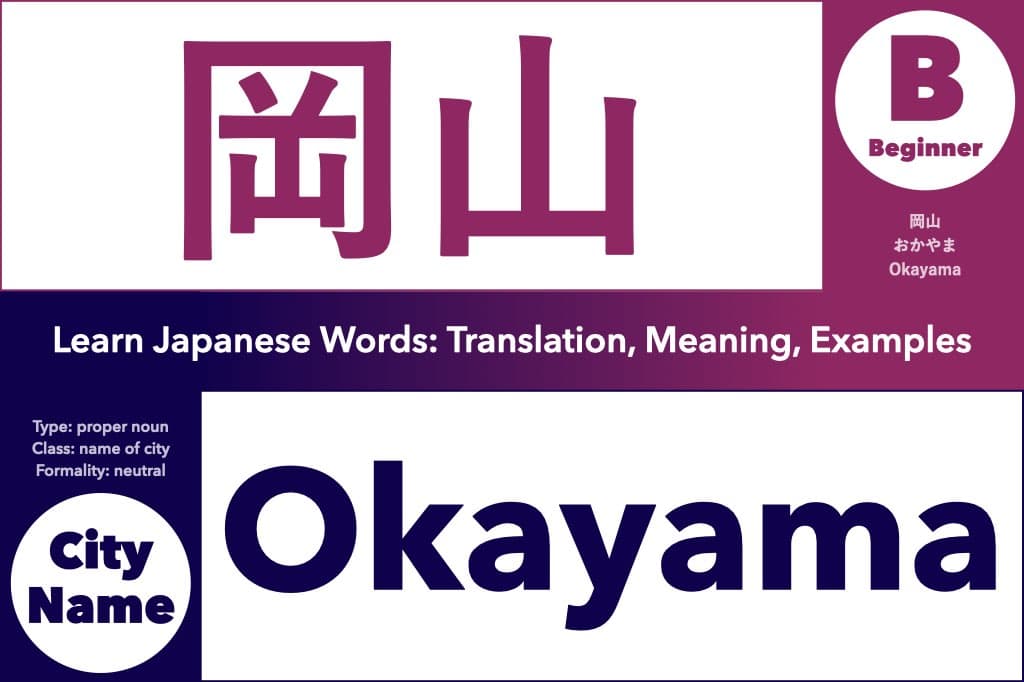
岡山 (おかやま, Okayama): Meaning, Translation, Examples
岡山 (おかやま, Okayama) is a proper noun that refers to Okayama City and Okayama Prefecture in western Japan. The name comes from the kanji 岡…
-
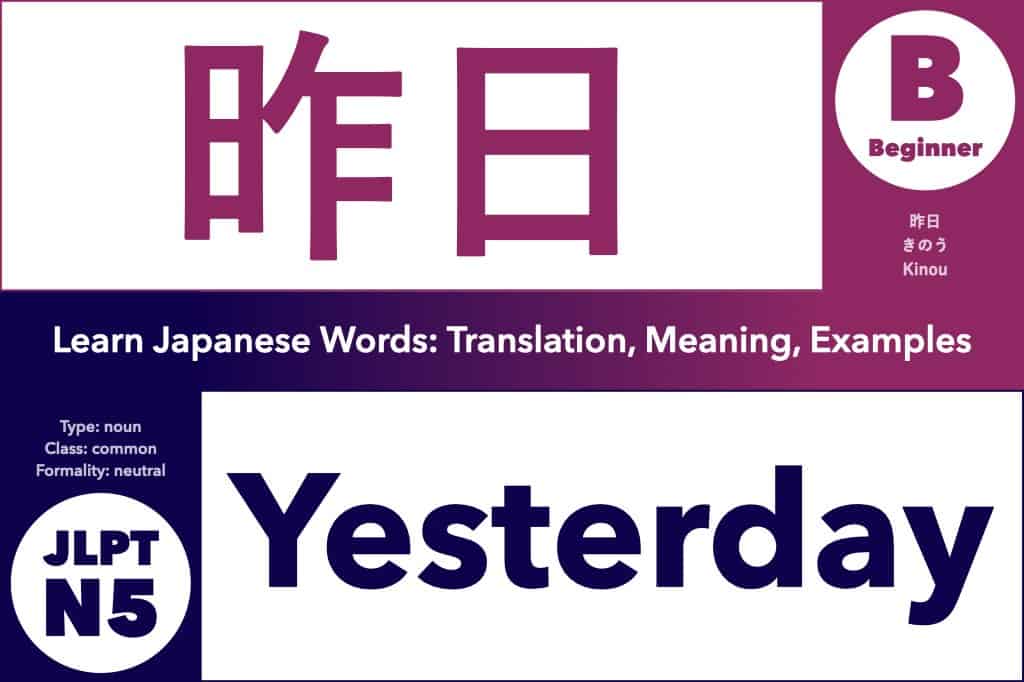
昨日 (きのう, kinou): Meaning, Translation, Examples
昨日 (きのう, kinou) means “yesterday” in Japanese. It’s a common time word used to talk about events that happened the day before today. In Japanese…
-
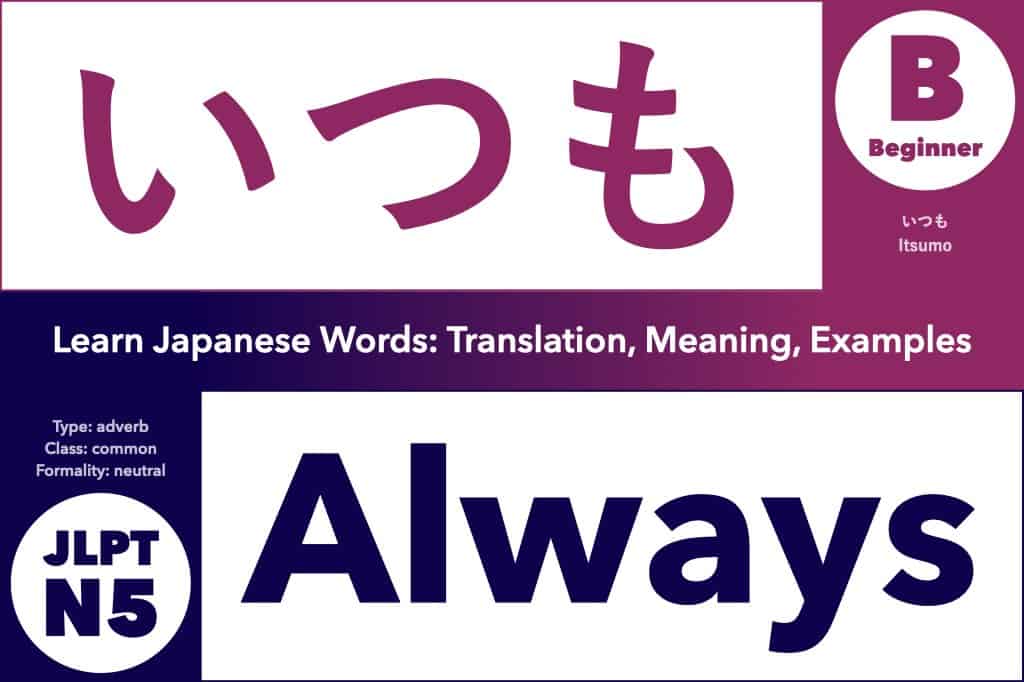
いつも (itsumo): Meaning, Translation, Examples
いつも (itsumo) means “always” or “all the time”. It’s used before a verb, action, or state to describe things that happen regularly or repeatedly. The…
-
閉幕する (へいまく する, heimaku suru): Meaning, Translation, Examples
閉幕する (へいまく する, heimaku suru) means “to draw the curtain on” or “to come to an end.” It’s the suru-verb form of 閉幕 (へいまく, heimaku),…
-
閉幕 (へいまく, heimaku): Meaning, Translation, Examples
閉幕 (へいまく, heimaku) means “falling of the curtain” or “the closing” of an event. It refers to the formal end of a festival, performance, or…
-
二十五 (にじゅうご, nijyuugo): Meaning, Translation, Examples
二十五 (にじゅうご, nijyuugo) means “25” or “twenty-five” in Japanese. It’s a basic number used for dates, ages, and general counting. In modern writing, Japanese also…
-
フェス (fesu): Meaning, Translation, Examples
フェス (fesu) means “fest” or “fest.“. It’s the shortened form of フェスティバル (fesutibaru), meaning “festival,” and is commonly used for large-scale music events or concerts…
-
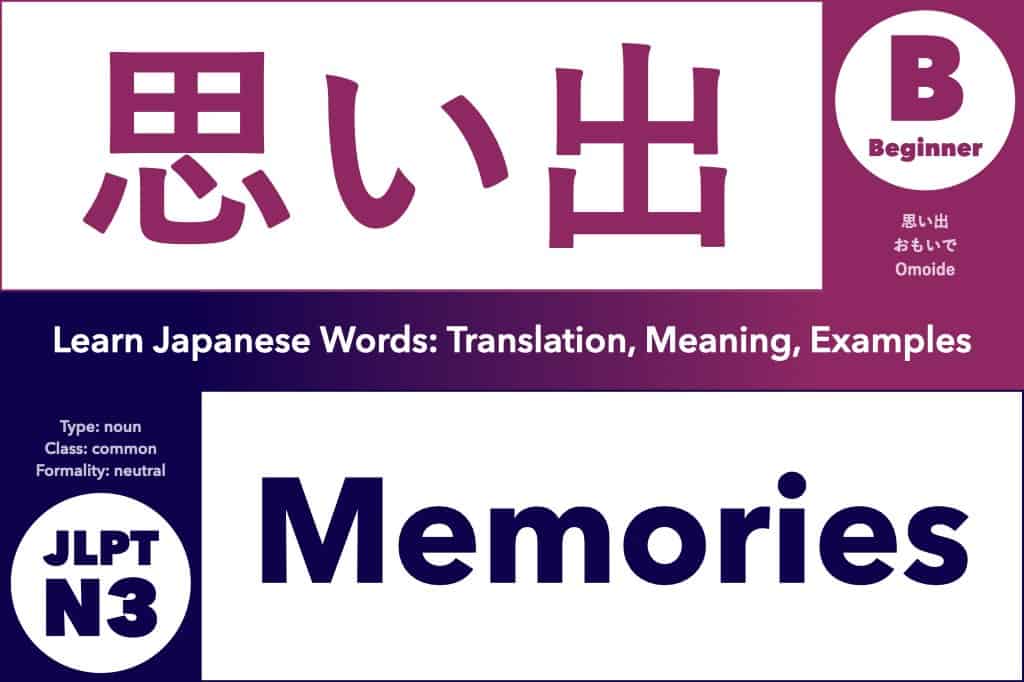
思い出 (おもいで, omoide): Meaning, Translation, Examples
思い出 (おもいで, omoide) means “memories” or “recollection.” It refers to something remembered from the past, often with an emotional or nostalgic feeling. It can describe…
-
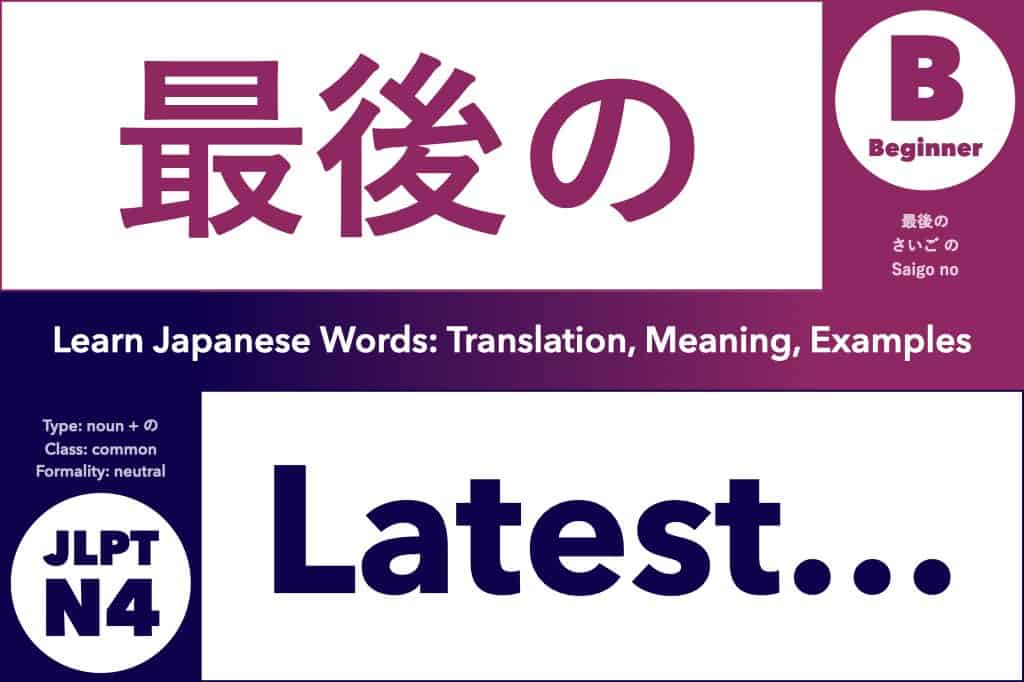
最後の (さいご の, saigo no): Meaning, Translation, Examples
最後の (さいご の, saigo no) means “latest,” “last…,” or “final…” It’s the noun 最後 (さいご, saigo) plus the particle の (no), which turns it into…
-
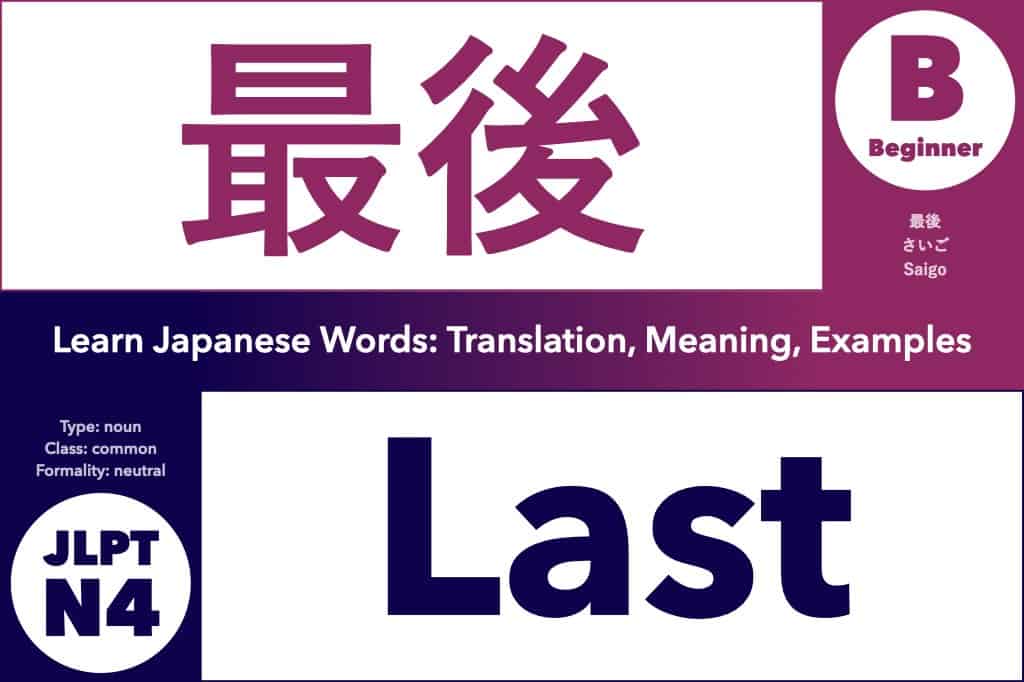
最後 (さいご, saigo): Meaning, Translation, Examples
最後 (さいご, saigo) means “last,” “end,” or “final.” It refers to a conclusion of a time period, sequence, or event. As a noun, it can…