
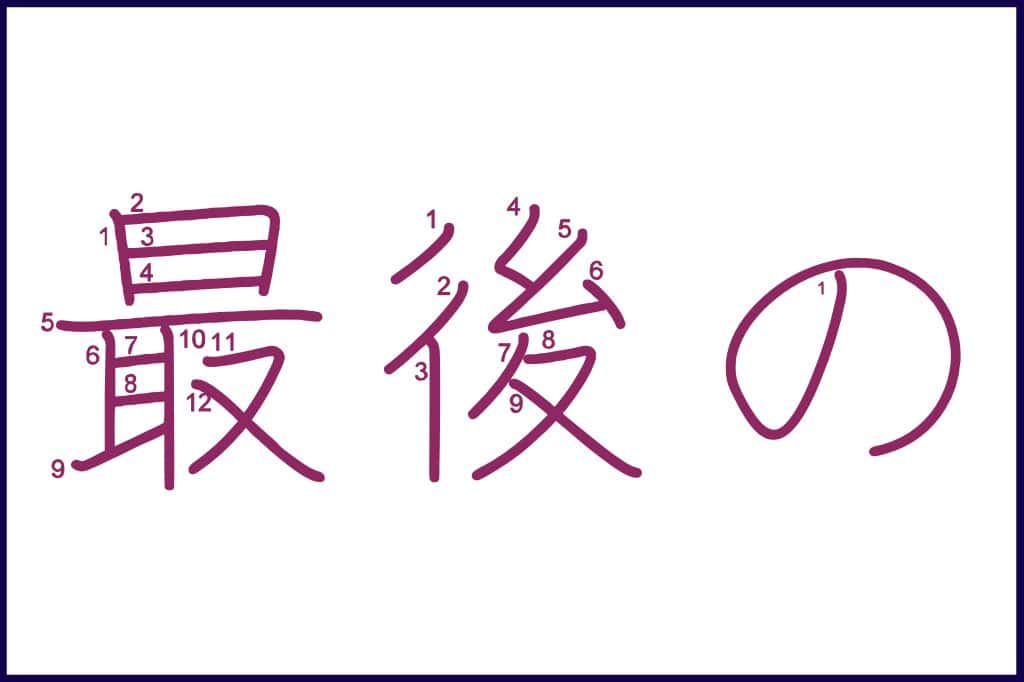
最後の (さいご の, saigo no) means “latest,” “last…,” or “final…” It’s the noun 最後 (さいご, saigo) plus the particle の (no), which turns it into a modifier for the noun that follows. It indicates the final item or moment, and can also add emotional nuance, suggesting something definitive or unrepeatable.
最後の
さいご の
saigo no
lastest, last…
In this post, you can explore all the meanings, translations, and natural usages of 最後の (さいご no, saigo no) and learn how to use this expression correctly in real-life Japanese. I will share useful example sentences so you can confidently talk about the “latest” or “last…” part of something, just like a native speaker.
最後の Means “Latest” in Japanese
Word: 最後の
Kana: さいご の
Romaji: saigo no
Meaning: latest, last…
Type: noun + particle の
Class: common, JLPT N4ish
Formality: neutral, general use
1. English Translations of 最後の
| 最後の |
|---|
| 最後 → 最後の |
| [noun + の] latest…, last…, final…, most recent… |
2. Japanese Meaning of 最後の
最後の (さいご の, saigo no) means “latest,” “last…,” or “final…“
This expression is formed by combining the noun 最後 (さいご, saigo) with the particle の (no), which turns it into a modifier or adjective-like expression that directly describes the noun following it.
In this form, 最後の marks something as the latest or most recent item, moment, stage, or part in a sequence, such as the last day of summer, the final episode of an anime, or the last chapter of a book. It highlights the position of something at the end of a timeline or order.
Depending on context, it can also express emotional nuance, suggesting that the moment or item is special, definitive, or may never occur again. This nuance often appears in personal reflections, farewells, or sentimental scenes in stories and everyday conversation.
3. How to Use 最後の in a Sentence
- 最後の…
Example Sentences
| 夏最後の思い出~✨❤️ |
|---|
| なつ さいご の おもいで ~✨❤️ |
| Summer’s final memory~✨❤️ My final memories of summer~✨❤️ |
| Natsu saigo no omoide ~✨❤️ |
| Free Lesson: J-Pop Stars #4 (ME:I, Kokona) |
More examples will be added in the future…