
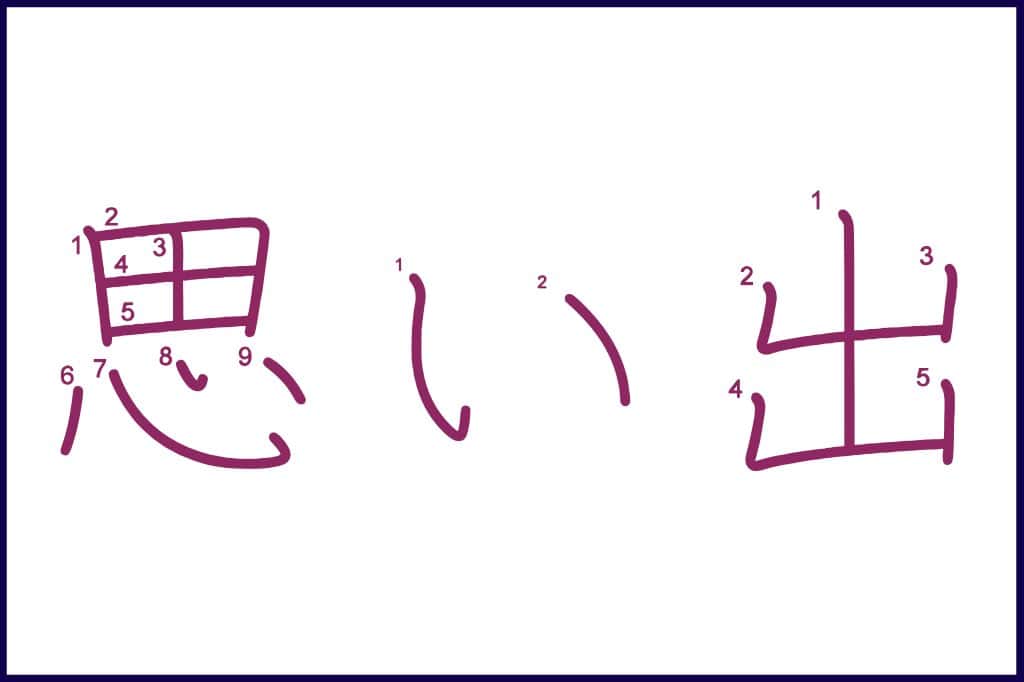
思い出 (おもいで, omoide) means “memories” or “recollection.” It refers to something remembered from the past, often with an emotional or nostalgic feeling. It can describe personal experiences, moments, or events that remain in someone’s mind. The noun is commonly taught around JLPT N4.
思いで
おもいで
omoide
memories
In this post, you will find all the translations and meanings of the Japanese word 思い出 (おもいで, omoide) and learn how to use this noun naturally. I’ll share many example sentences so you can confidently talk about your nostalgic moments in everyday Japanese, just like a native speaker.
思い出 Means “Memories” in Japanese
Word: 思い出
Kana: おもいで
Romaji: omoide
Meaning: memories
Type: noun
Class: common, JLPT N3
Formality: neutral, general language
1. English Translations of 思い出
| 思い出 |
|---|
| [noun] memories, reminiscene, recollections |
2. Japanese Meaning of 思い出
思い出 (おもいで, omoide) means “memories,” “reminiscence,” or “recollection“.
The noun refers to past experiences that someone recalls, often with emotion or personal meaning. It is commonly used for nostalgic, happy, or memorable moments, such as holidays, trips, events, or important life experiences.
Since Japanese nouns don’t change for singular or plural, 思い出 can refer to one memory or many memories, depending on context.
Like with other nouns, 思い出 can take either the polite copula です (desu) or the casual copula だ (da). Using です makes your sentence sound more formal, polite, or respectful. Using だ sounds more casual, direct, and natural in everyday conversation with close friends and family.
- Formal situations: 思い出です
- Casual situations: 思い出だ
3. How to Use 思い出 in a Sentence
- 思い出は (sentence)。
- 思い出が (sentence)。
- (sentence) 思い出だ。
- (sentence) 思い出です。
Example Sentences
| 夏最後の思い出~✨❤️ |
|---|
| なつ さいご の おもいで ~✨❤️ |
| Summer’s final memory~✨❤️ My final memories of summer~✨❤️ |
| Natsu saigo no omoide ~✨❤️ |
| Free Lesson: J-Pop Stars #4 (ME:I, Kokona) |
More examples will be added in the future…