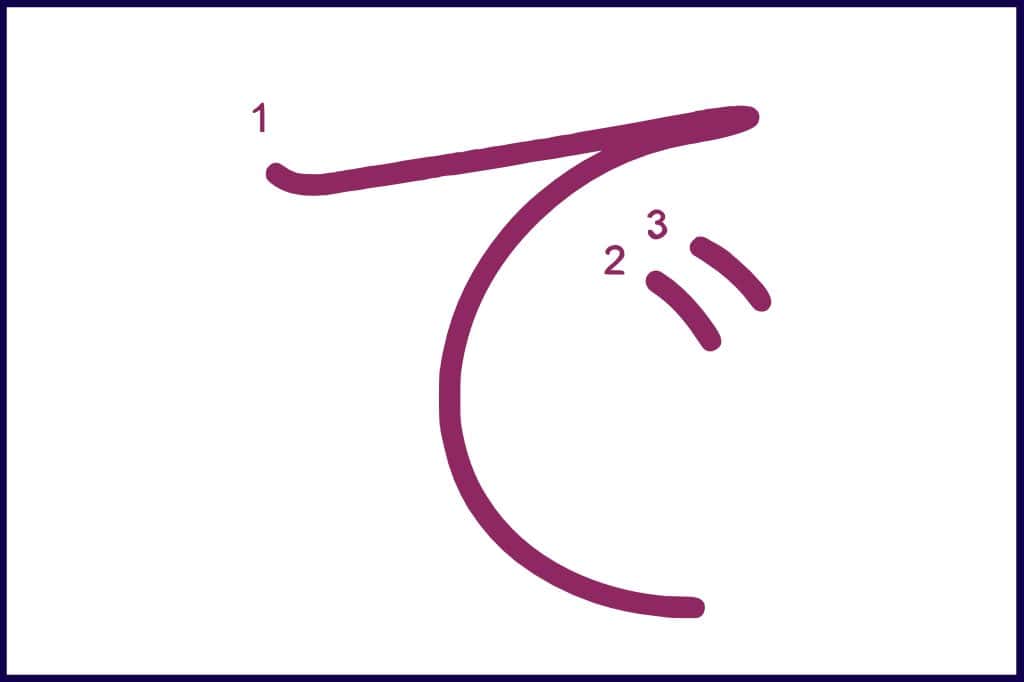
で (de) is a core particle used to show where an action happens, how something is done, or under what condition or situation an action takes place. It has no single fixed translation, but it often means “at“, “in“, “by“, or “with” depending on context. It’s typically taught at the JLPT N4 level.
で
de
at, in, by, with
marks place, means, method, or circumstance
In this post, you will find all the meanings, functions, and nuances of the Japanese particle で (de). I will show you how to use it and provide plenty of example sentences so you will gain the confidence to translate で by yourself and use it in your own sentences, like a native speaker.
で Means “At”, “In”, “By”, or “With” in Japanese
Word: で
Romaji: de
Meaning: at, in, by, with
Function: marks place, means, method, or circumstance
Type: particle
Class: common, JLPT N4
Formality: neutral, general use
1. English Translations of で
| で |
|---|
| [particle] at, in marks the location where an action happens |
| [particle] by, with marks the means or method |
| [particle] because of, due to marks the cause or situation |
2. Japanese Meaning of で
The particle で (de) shows the context in which an action occurs.
It is used to mark:
- at which location something happens
- by what means or tool something happens
- because of what cause or situation something happens
and often corresponds to:
- at, in (location marker)
- by, with (means marker)
- because of, due to (cause marker)
Unlike the particle に (ni), which marks existence or destination, the particle で (de) always implies action.
It answers questions like:
- Where does the action happen?
- Under what condition?
- How is it done?
- Using what?
1. Place Where an Action Happens (Core Function)
This is the most basic and important use of で.
Example 1)
- 学校で食べる。
がっこう で たべる。
Gakkou de taberu.
I eat at school.
Example 2)
- 家で映画を見る。
いえ で えいが を みる。
Ie de eiga wo [o] miru.
I watch movies at home.
Example 3)
- フェスで歌った。
フェス で うたった。
Fesu de utatta.
I sang at the festival.
Here, the particle で usually means “at” or “in“.
2. Means or Method (By / With)
The particle で is also used to show how something is done or what tool or method is used.
Example 1)
- 電車で行く。
でんしゃ で いく。
Densha de iku.
I go by train.
Example 2)
- 日本語で話す。
にほんご で はなす。
Nihongo de hanasu.
I speak in Japanese.
Example 3)
- ペンで書く。
ペン で かく。
Pen de kaku.
I write with a pen.
In this usage, the で answers the question “by what means?” or “using what?” and commonly translates as “by” or “with“.
3. Cause, Reason, or Situation
The particle で can also express the reason or circumstance behind a result.
Example 1)
- 雨で中止になった。
あめ で ちゅうし に なった。
Ame de chuushi ni natta.
It was canceled because of the rain.
Example 2)
- 病気で休みます。
びょうき で やすみます。
Byouki de yasumimasu.
I’m taking a break due to illness.
Example 3)
- 事故で電車が止まりました。
じこ で でんしゃ が とまりました。
Jiko de densha ga tomarimashita.
The train stopped because of an accident.
Here, で shows the background condition that caused the outcome.
How to tell which で it is?
A) Place + で + Action → Location of Action
If a place is followed by で and a verb, it usually marks where the action happens.
B) Tool / Language / Transport + で → Means or Method
If で follows a tool, language, or vehicle, it marks how the action is done.
C) Situation + で → Cause or Reason
If で follows a condition or state and leads to a result, it expresses cause.
3. How to Use で in a Sentence
- (place) で (action)
- (reason) で (result)
- (tool / method) で (action)
- (group / range) で (evaluation)
Example Sentences
| 昨日岡山できびだんご食べた🤓 |
|---|
| きのう おかやま で きびだんご たべた 🤓 |
| I ate kibidango in Okayama yesterday 🤓 I had kibidango in Okayama yesterday 🤓 Yesterday, I ate kibidango in Okayama 🤓 |
| Kinou Okayama de kibidango tabeta 🤓 |
| Free Lesson: J-Pop Stars #7 (DXTEEN, Ken) |
| この星は 爆発で生まれた |
|---|
| この ほし は ばくはつ で うまれた |
| This star was born from an explosion. This planet was born from an explosion. |
| Kono hoshi ha [wa] bakuhatsu de umareta |
| Sam Porter Bridges (Death Stranding) |
| アハハ でもおかげで回収も楽でしょ |
|---|
| アハハ でも おかげ で かいしゅう も らく でしょ |
| Haha, but thanks to that, retrieving it should also be easy, right? |
| Ahaha demo okage de kaishuu mo raku desho |
| Satoru Gojo (Jujutsu Kaisen) |
More examples will be added in the future…