
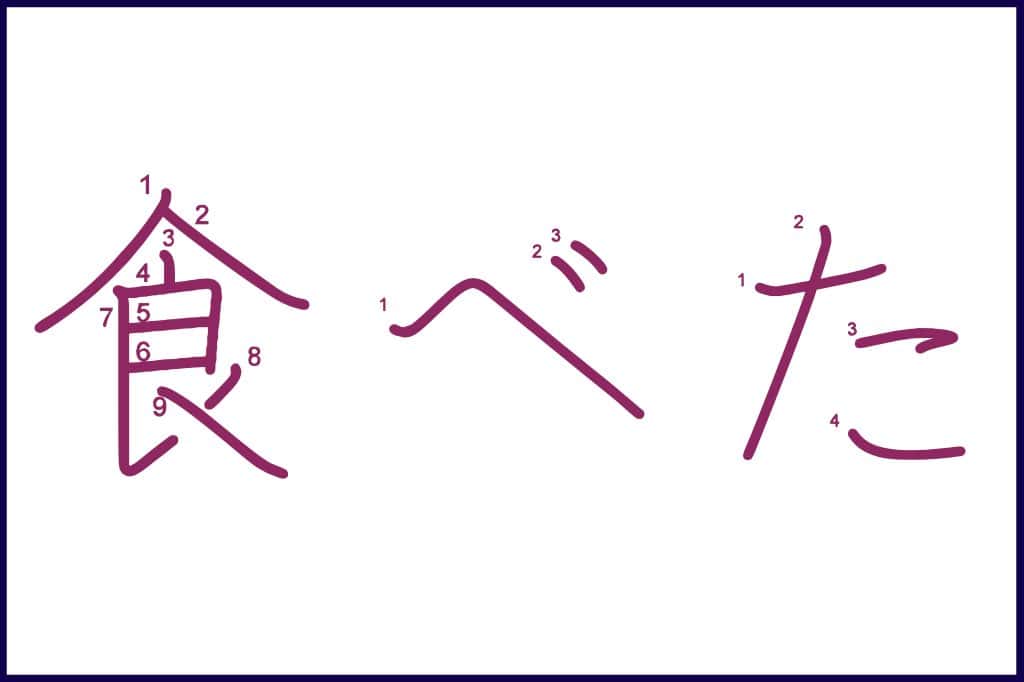
食べた (たべた, tabeta) means “ate” or “have eaten“. It’s the plain past tense of the verb 食べる (たべる, taberu), meaning “to eat”. 食べた is used in casual speech to state that someone has eaten or finished eating. It appears frequently in daily conversation and is commonly taught at the JLPT N5 level.
食べた
たべた
tabeta
ate, had (food)
In this post, you will find the full meaning and common translations of 食べた (たべた, tabeta) and how to use this essential past-tense verb naturally in Japanese. I will share plenty of example sentences so you can confidently talk about meals and things you ate, just like a native speaker.
食べた Means “Ate” in Japanese
Word: 食べた
Kana: たべた
Romaji: tabeta
Meaning: ate, had (food)
Type: verb (past tense)
Class: common, JLPT N5
Formality: informal language
Dictionary Form: 食べる (たべる, taberu, “to eat”)
1. English Translations of 食べた
| 食べた |
|---|
| 食べる → 食べた |
| [verb (past tense)] ate, had (food), have eaten |
2. Japanese Meaning of 食べた
食べた (たべた, tabeta) means “ate“, “had (food)“, or “have eaten“.
It is the plain past tense form of the verb 食べる (たべる, taberu, “to eat”).
- 食べる (dictionary form)
- 食べた (past tense 〜た)
- 食べます (polite present ~ます)
- 食べました (polite past ~ました)
食べた is used to describe that someone has eaten something. It is casual and commonly used in conversations with friends, family, or in informal writing.
In formal speech, customer service, public announcements, and polite situations, the form 食べました (たべました, tabemashita) is typically used instead.
Simple Conjugation Table of 食べた
| 食べた | Japanese | Reading | Meaning |
|---|---|---|---|
| Present | 食べる たべる | taberu | eat |
| Te Form | 食べて たべて | tabete | eat (and) …, Eat! |
| Past Tense | 食べた たべた | tabeta | ate, have eaten |
3. How to Use 食べた in a Sentence
- (thing) 食べた
- (thing) を食べた
Example Sentences
| 昨日岡山できびだんご食べた🤓 |
|---|
| きのう おかやま で きびだんご たべた 🤓 |
| I ate kibidango in Okayama yesterday 🤓 I had kibidango in Okayama yesterday 🤓 Yesterday, I ate kibidango in Okayama 🤓 |
| Kinou Okayama de kibidango tabeta 🤓 |
| Free Lesson: J-Pop Stars #7 (DXTEEN, Ken) |
More examples will be added in the future…