

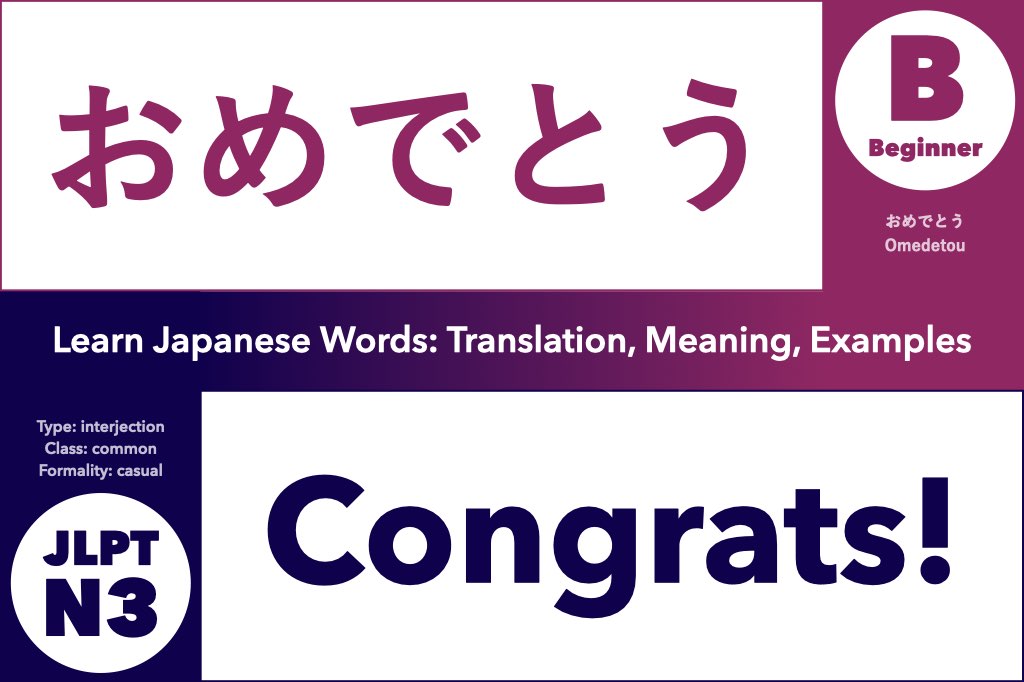
おめでとう (omedetou) means “Congrats!” or “Congratulations!” and is used to casually celebrate good news, achievements, or happy occasions. It can be used on its own or paired with an event, as in 誕生日おめでとう (“happy birthday“). It’s a friendly, everyday expression, typically taught around JLPT N3.
おめでとう
omedetou
Congrats!, Congratulations!
In this post, you will find all the translations and meanings of おめでとう (omedetou) and learn how to use this celebratory expression naturally in everyday Japanese. I’ll share many example sentences so you can confidently congratulate your Japanese friends in different situations, just like a native speaker.
おめでとう Means “Congrats!” in Japanese
Word: おめでとう
Romaji: omedetou
Meaning: Congrats!
Type: interjection
Class: common, JLPT N3
Formality: more on the casual side
1. English Translations of おめでとう
| おめでとう |
|---|
| [interjection] Congrats! Congratulations! Well done! Best wishes! All the best! |
2. Japanese Meaning of おめでとう
おめでとう (omedetou) means “Congrats!” or “Congratulations!“
It’s used to celebrate someone’s good news, success, or a happy occassion.
It’s friendly and casual, often use with friends, family, or people close to you.
The interjection can stand alone or be conbined with the event being celebrated.
One of its most common usages is in the set phrase お誕生日おめでとう (おたんじょうびおめでとう, o-tanjoubi omedetou), which means “happy birthday” or literally “congratulations on your birthday.“
For a more polite or formal tone, especially with teachers, coworkers, or people you don’t know well, you can say おめでとうございます (omedetou gozaimasu). Both forms express warm celebration, but the ございます version simply adds extra respect.
3. How to Use おめでとう in a Sentence
- おめでとう!
- おめでとうございます!
- (happy occassion) おめでとう!
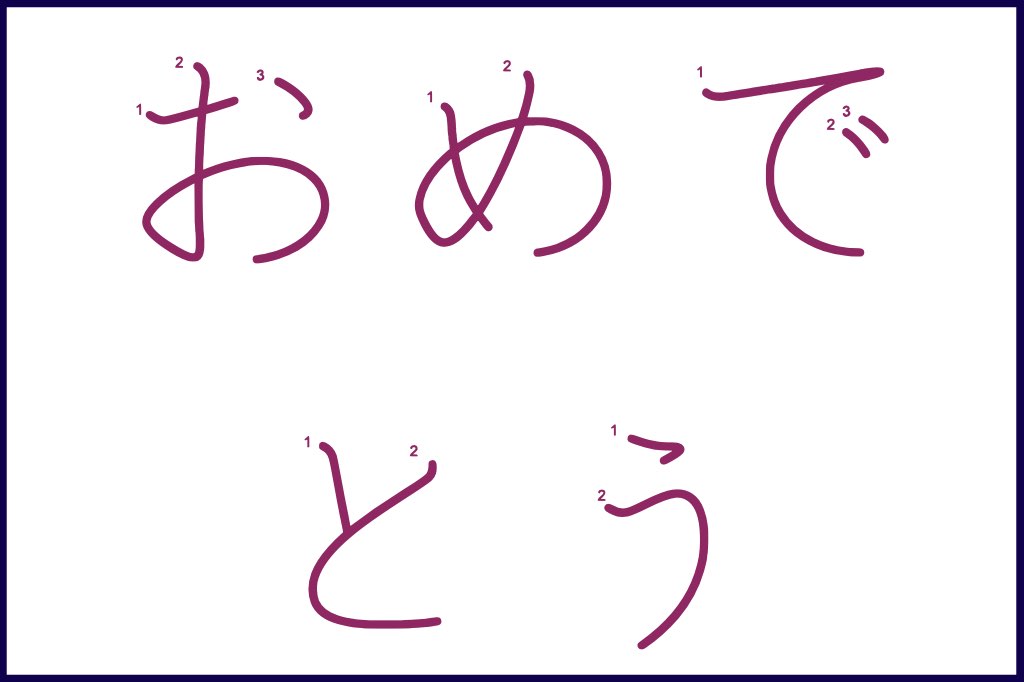
Example Sentences
| お誕生日おめでとう🎉🎂🎁 |
|---|
| おたんじょうび おめでとう🎉🎂🎁 |
| Happy birthday! 🎉🎂🎁 Congratulations on (your) birthday! 🎉🎂🎁 |
| O-tanjoubi omedetou 🎉🎂🎁 |
| Free Lesson: J-Pop Stars #3 (JO1, Ruki) |
| 誕生日おめでとう俺 |
|---|
| たんじょうび おめでとう おれ |
| Happy birthday to me |
| Tanjoubi omedetou ore |
| SKY-HI (BMSG) |
More examples will be added in the future…