
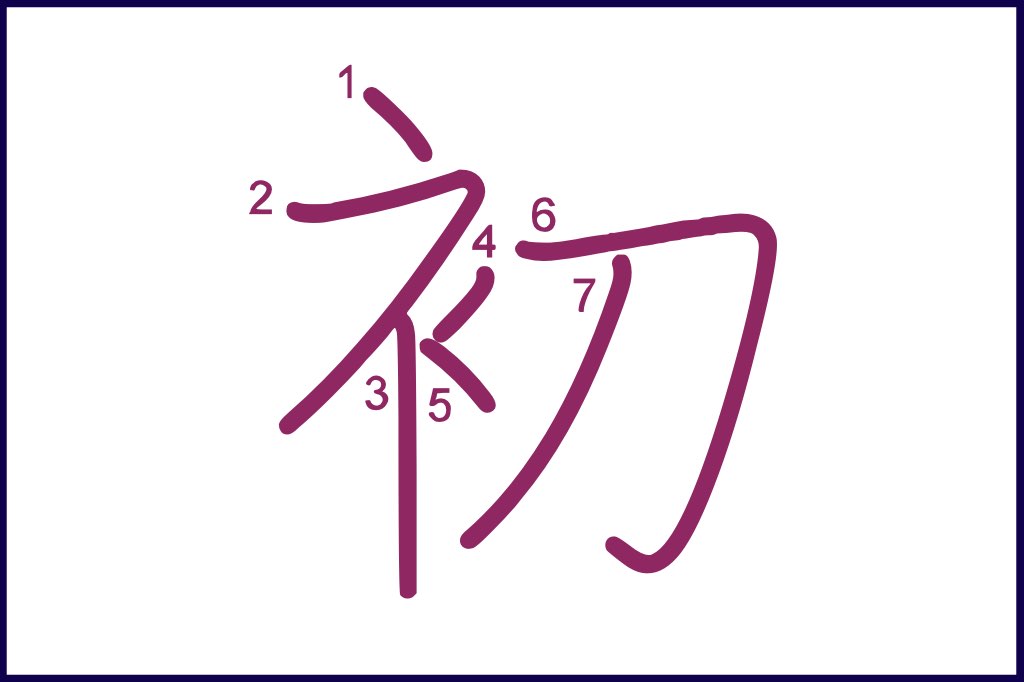
初 (はつ, hatsu) means “first,” “initial,” or “beginning.” It marks the very first occurrence or the starting point of an event, state, or experience, emphasizing that something is happening for the first time. It’s also common as a prefix in kanji compounds, but typically taught at the JLPT N1 level.
初
はつ
hatsu
first, initial, beginning
In this post, you will find all the translations and meanings of 初 (はつ, hatsu) and learn how to use it naturally in everyday Japanese. I’ll share many example sentences so you can confidently express first-time events and understand its usage like a native speaker.
初 Means “First” in Japanese
Word: 初
Kana: はつ
Romaji: hatsu
Meaning: first, initial, beginning
Type: noun, prefix
Class: common, JLPT N1
Formality: neutral, general use
1. English Translations of 初
| 初 |
|---|
| [noun, prefix] first, new, initial |
2. Japanese Meaning of 初
初 (はつ, hatsu) means “first,” “new,” or “initial.”
It is a Japanese noun and prefix that indicates that something is happening for the first time or marks the very first occurence of something.
You will often see it attached to other words as a prefix, like for example:
- 初恋 (はつこい, “first love”)
- 初雪 (はつゆき, “first snowfall”)
- 初詣 (はつもうで, “first shrine visit”)
The prefix is more formal and compact than using the longer 初の (はつの, hatsu no) or 初めての (はじめての, hajimete no).
Like with other nouns, 初 can take either the polite copula です (desu) or the casual copula だ (da). Using です makes your sentence sound more formal, polite, or respectful. Using だ sounds more casual, direct, and natural in everyday conversation with close friends and family.
- Formal situations: 初です
- Casual situations: 初だ
3. How to Use 初 in a Sentence
- (sentence) 初です。
- (sentence) 初だ。
- 初○○
- 初の…
Example Sentences
| 初ファンミーティングありがとうございました! |
|---|
| はつ ファン ミーティング ありがとう ございました! |
| Thank you for our first fan meeting! Thank you for (joining) our first fan meeting! |
| Hatsu fan miitingu arigatou gozaimashita! |
| Free Lesson: J-Pop Stars #2 (HANA, Yuri) |
More examples will be added in the future…